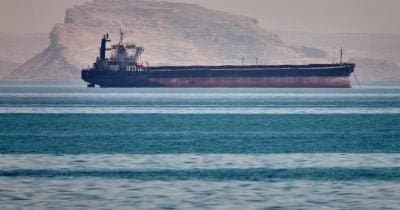
In a significant escalation of tensions, President Donald Trump has announced the reinstatement of the Iranian blockade in the Strait of Hormuz. This move comes with a new cargo fee of 20% imposed on all vessels assisted by U.S. forces in navigating this critical maritime route.
The Strait of Hormuz is a vital artery for global oil shipments, with roughly 20% of the world's oil passing through its waters. This blockade and associated fees can disrupt not only oil markets but also broader economic relationships, leading to increased shipping costs and, potentially, higher fuel prices.
In reaction to these developments, Bitcoin has seen a decline from its recent peak above $64,000, indicating a market sensitivity to geopolitical changes. Such turmoil often spurs volatility in cryptocurrency markets as investors seek refuge in digital assets during times of uncertainty, while also reconsidering risk exposure in traditional assets.
Furthermore, the implications stretch beyond immediate economic factors. An unstable Middle East can lead to shifts in energy policies globally, resonating in various sectors, including energy payments and international trade agreements. Stakeholders in markets should prepare for fluctuations as the situation develops.