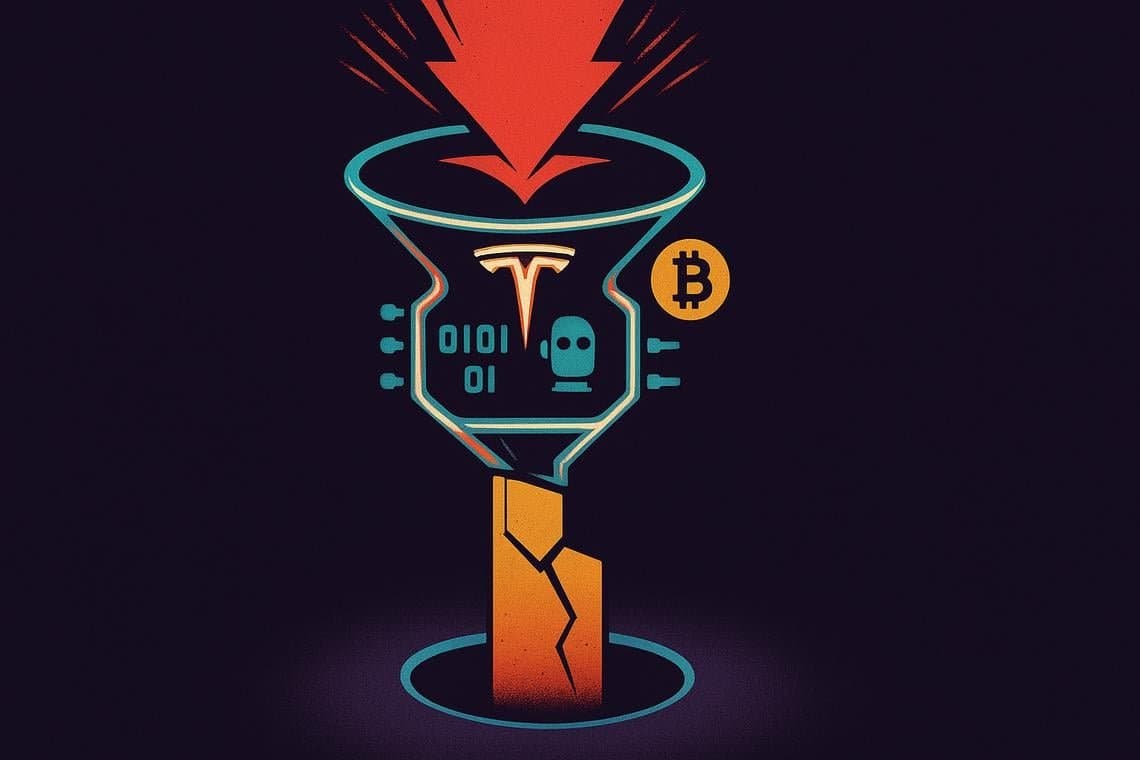
Tesla’s ambitious $25 billion investment in AI and robotics this year shifts the company’s financial narrative into uncharted territory. Despite posting $1.4 billion in free cash flow during Q1 2026 alongside $22.38 billion in revenue, the scale of planned spending threatens to push cash flow negative before the end of 2026. This disparity between earnings and expenditure hints at significant financial strain and recalibrated investor expectations.
Financial Dynamics Behind Tesla’s AI Commitment
The $25 billion allocation to AI projects, including the Optimus humanoid robot and expansive computational infrastructure, exceeds Tesla’s last quarter free cash flow by nearly 18 times. To fund this level of outlay, Tesla would theoretically need to sustain Q1-level free cash flow every quarter for over four years straight. This mathematical reality starkly contrasts with Tesla’s current earning capacity, raising fundamental questions about the company’s liquidity management and future profitability.
For investors, this investment style moves Tesla away from the profile of a traditional cash-generating industrial company toward a high-risk tech innovator highly dependent on anticipated long-term returns. This is compounded by Tesla’s exclusive focus on Bitcoin for treasury reserves holding 11,509 BTC worth approximately $786 million without selling any during Q1 2026, even amid price swings. Unlike companies diversifying into stablecoins or Ethereum, Tesla’s narrow Bitcoin strategy exposes it to the volatile crypto asset class without apparent hedging.
Market Reactions and Potential Implications
The market’s response was swift and meaningful, with Tesla shares falling roughly 20% amid concern over the excessive capital intensity of its AI push. This drop signals investors’ increasing skepticism about funding AI infrastructure that may not generate short-term profits. A growing trend in 2026 sees capital markets prioritizing companies capable of delivering immediate, tangible cash flow rather than speculative, multi-year technology bets.
Tesla’s cash flow profile, while healthy in isolation, appears less solid when evaluated against the AI budget’s magnitude. The company’s approach may pressure it to either raise additional capital, reconsider the pacing of its AI spending, or expose itself to increased financial risk. For crypto investors, Tesla’s unwavering Bitcoin treasury stance during volatile market conditions shows a commitment that could yield outsized returns or substantial paper losses, depending on BTC’s trajectory.
This shift invites comparison with other tech firms grappling with how to monetize AI investments effectively. Investor sentiment toward tech heavyweights and AI spending is increasingly cautious, and Tesla’s experience encapsulates this tension. Stakeholders will watch closely whether Tesla can convert its AI ambitions into the kind of operational cash flow that justifies the sizeable upfront resources committed.
This material is informational and does not constitute financial advice.