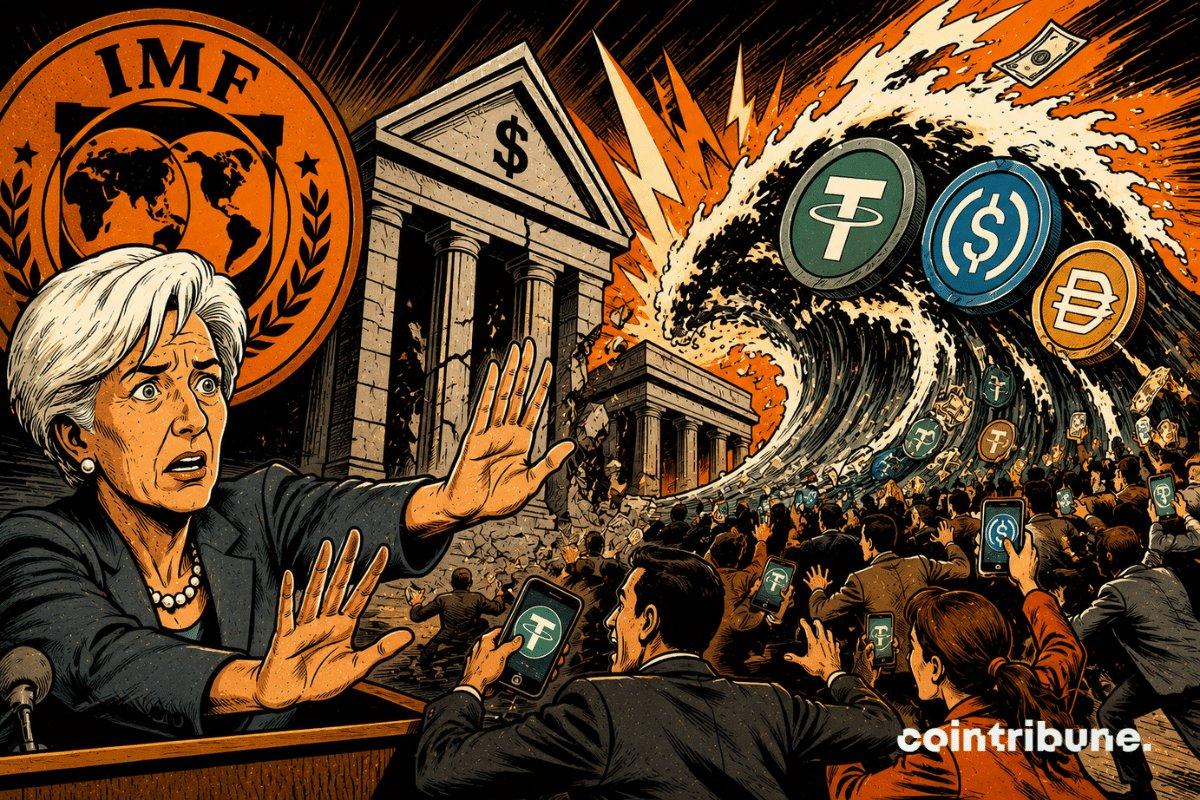
The recent report from the International Monetary Fund (IMF) underscores a critical shift in the macroeconomic landscape, driven by the emergence of stablecoins. Led by economist Brandon Joel Tan, this analysis highlights how stablecoins, particularly those pegged to the US dollar, are becoming formidable financial instruments in economies where access to traditional currencies is restricted. By providing a workaround for currency rationing, these digital assets facilitate capital flows and can inadvertently trigger economic instability.
As detailed in the IMF's findings, stablecoins offer a lifeline to individuals in regions burdened by stringent monetary policies. For instance, the report documents the use of stablecoins in Argentina, where citizens have increasingly turned to informal 'crypto caves' to exchange pesos for more stable digital assets. This behavior reflects a broader trend where these digital currencies act as a hedge against local currency devaluation.
Emerging economies face unique challenges, and the IMF paper illustrates that stablecoins are not merely a byproduct of technological advancement but rather a necessary adaptation to systemic financial constraints. In Bolivia, the practice of using the USDT token as a pricing index further exemplifies how stablecoins are integrating into everyday commerce, allowing businesses to navigate volatile local currencies while still engaging in international trade.
This phenomenon reveals a pressing concern: the transparency of stablecoin pricing reflects real-time dollar shortages, contributing to massive capital outflows. As the IMF emphasizes, this creates a feedback loop where the visibility of dollar scarcity accelerates economic crises. As investors and policymakers become increasingly aware of these dynamics, there could be significant implications for regulatory frameworks surrounding stablecoins. The report suggests that without adequate oversight, the proliferation of stablecoins may exacerbate existing economic vulnerabilities, particularly in emerging markets that are already grappling with financial instability.
In conclusion, the findings from the IMF serve as a clarion call for both regulators and market participants to reconsider the role of stablecoins in today's economy. The report not only highlights their potential to offer financial solutions in constrained environments but also warns of the risks associated with their unchecked growth. As stablecoins continue to rise in prominence, their impact on global financial stability will demand ongoing scrutiny and thoughtful regulation.
This material is informational and should not be considered financial advice.