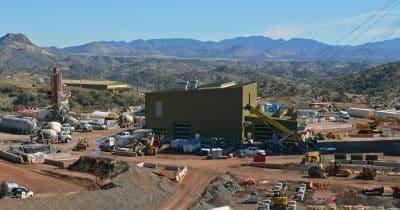
The impending authorization of South32's Hermosa Critical Minerals Project signals a significant shift in the United States' strategy for mineral independence. This underground mine, nestled in Arizona’s Patagonia Mountains, represents the first critical minerals venture to potentially gain federal approval, underscoring the country's push to reduce reliance on foreign sources for crucial components used in batteries, defense systems, and various industrial applications.
The Project's Economic Implications
Initially estimated at $2 billion, South32's Hermosa venture has seen its costs swell to approximately $3.3 billion. This substantial increase 50% more than the original projections reflects the complexities involved in launching such an expansive mining operation. With an anticipated production start in the latter half of fiscal 2028, this timeline coincides with a crucial moment for the global market as demand increases for battery-grade minerals.
The Hermosa site is critical not just for its zinc and manganese deposits but also for its potential to supply other valuable resources like silver, lead, and copper. The U.S. has not produced manganese domestically for decades, relying almost entirely on imports for this essential mineral used in lithium-ion batteries and steel production.
Political and Environmental Context
The approval process for Hermosa has cross-party backing, having received fast-track designation under the Biden administration's FAST-41 program, which the Trump administration subsequently maintained. This bipartisan approach enhances the project's chances of success amid growing geopolitical tensions and the U.S.'s intent to minimize dependence on China for mineral processing capabilities.
However, local communities and environmental groups are raising alarms about potential impacts on water resources and air quality surrounding the mining activities. As South32 commences construction on private land, the ongoing environmental assessments conducted by the Arizona Department of Environmental Quality will be crucial in influencing public perception and operational viability in the long term.
Implications for Investors
The revised budget of $3.3 billion is a critical figure for investors to monitor. The successful initiation of production could position South32 favorably within a market that is rapidly expanding its battery manufacturing capabilities and restoring domestic industrial supply chains. Nevertheless, various risks loom large, including further cost escalations, regulatory delays stemming from environmental reviews, and fluctuations in commodity prices.
As the market landscape continues to change, the Hermosa project may redefine how mineral resources are perceived and managed within the context of national security and economic resilience. The outcome of this venture could set precedents for future projects and investment strategies in the critical minerals sector.