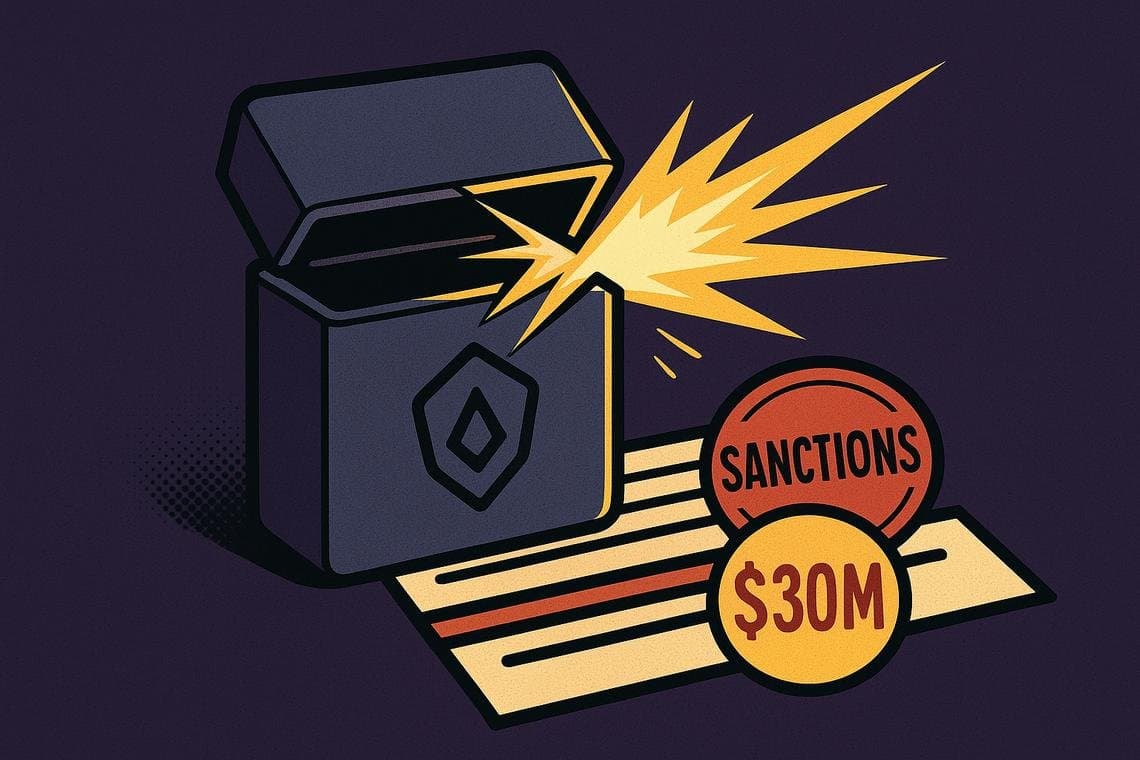
South Korea’s Financial Supervisory Service (FSS) has formally initiated sanction procedures against Dunamu, the operator of Upbit, following a major security breach in November 2025. The hack drained approximately 44.5 billion won, or around $30 million, in Solana-based assets from Upbit’s hot wallet within less than an hour, highlighting vulnerabilities in one of Asia’s largest crypto exchanges.
The Facts Behind the $30 Million Breach and Sanction Process
The incident unfolded at 4:42 a.m. local time on November 27, 2025, when attackers rapidly emptied funds from Upbit’s Solana hot wallet in just 54 minutes. Dunamu compensated 38.6 billion won ($26 million) from its reserves to cover customer losses, while an additional 2.6 billion won ($1.7 million) of stolen assets remain frozen. Authorities suspect North Korea’s Lazarus Group, although no official confirmation has been made.
The FSS’s recent issuance of a formal inspection report to Dunamu is the initial procedural step towards potential penalties. This triggers a multi-tiered review involving the Sanctions Review Committee, Securities and Futures Commission, and the Financial Services Commission before any final decision is made. The firm began inspection roughly seven months ago, underscoring the deep complexity in investigating such breaches within the current regulatory framework.
South Korea’s current Virtual Asset User Protection Act, under which this case is evaluated, lacks explicit stipulations for exchange hack sanctions. This legal gap creates uncertainty around penalty severity and exposes regulatory challenges when dealing with novel cybercrime scenarios. FSS Governor Lee Chan-jin noted the limitations but insisted the hack could not be ignored, signaling a willingness to strengthen oversight despite legislative shortcomings.
Implications for South Korea’s Crypto Market and Regulation
This sanction process against Dunamu could set a critical precedent in Asia’s most active crypto market, where exchange hacks have repeatedly tested governance and investor protection measures. The lack of clear penalty guidelines leaves regulators navigating uncharted territory, potentially leading to new standards or amendments to crypto laws.
For investors, the sizable loss and protracted regulatory response raise questions about exchange security and the adequacy of existing protections. Dunamu’s reimbursement of most customer losses demonstrates a willingness to absorb financial risk, but it also highlights the systemic exposure hot wallets present. Future regulatory clarity may drive exchanges to enhance security protocols or adopt insurance mechanisms to safeguard users.
Meanwhile, ongoing suspicion of state-sponsored actors like the Lazarus Group accentuates geopolitical risks intertwined with crypto security. This shows the necessity for enhanced collaboration between regulators, exchanges, and intelligence agencies to address cyber threats more effectively.
This analysis addresses the evolving regulatory challenges following one of the largest crypto exchange breaches in South Korea, with potential ripple effects on market confidence and legislative reforms.