On February 12, 2026, the iShares MSCI South Korea ETF (EWY) experienced an unprecedented inflow of $281 million, marking the largest single-day capital influx in its history. This remarkable surge can be attributed to a single entity: SK Hynix, the world's second-largest memory chip manufacturer, which now holds approximately 23% of the ETF's total assets.
Unlike typical market movements driven by macroeconomic factors or currency fluctuations, this influx signals a targeted investment strategy focusing on a specific sector semiconductors, particularly in the space of artificial intelligence. SK Hynix's high-bandwidth memory (HBM) chips have become integral to the infrastructure supporting AI applications, solidifying its status as a key player in a burgeoning sector.
The Strategic Shift to American Depositary Receipts
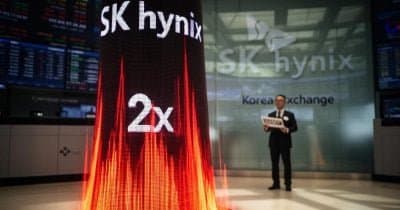
Adding to the excitement is SK Hynix's recent debut on the Nasdaq through American Depositary Receipts (ADRs), which raised approximately $26.5 billion, setting the record for the largest US IPO by a foreign company. This move not only democratizes access to the company's shares for US investors but also ignited interest in derivative products. Following the IPO, various ETF issuers rushed to prepare 2x leveraged and inverse ETFs focused on SK Hynix's ADRs.
The timing of the record inflow into EWY is crucial; it occurred just before these new investment vehicles became widely accessible. For many investors seeking exposure to SK Hynix without the complexities of navigating the Korea Exchange, EWY was the most efficient option available.
Investment Considerations and Risks
However, this concentrated exposure carries inherent risks. With 23% of the ETF tied to a single stock, investors are essentially betting on SK Hynix rather than gaining true geographic diversification. Any volatility in SK Hynix's performance, whether due to disappointing earnings, supply chain challenges, or a slowdown in AI demand, could have a disproportionate impact on the ETF's value.
Furthermore, the introduction of leveraged single-stock ETFs complicates the investment landscape. While these products promise the potential for significant short-term gains, they come with a catch: daily rebalancing mechanics can lead to performance decay over time. Investors holding a 2x leveraged ETF for extended periods often find that their returns do not correlate directly with the underlying stock's performance, leading to unexpected outcomes.
As SK Hynix continues to dominate discussions around semiconductor investments, one critical metric to monitor is HBM chip pricing and order book visibility. The company's current premium valuation hinges on the assumption that spending on AI infrastructure will accelerate. Any signals suggesting a slowdown in demand from major players like Microsoft or adjustments in supply chains could lead to significant repercussions for both SK Hynix and the EWY ETF.
This material is informational and not financial advice.