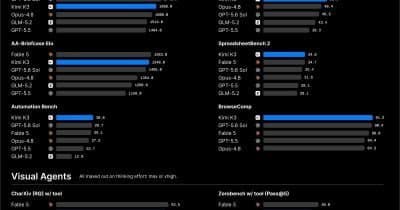
Beijing-based Moonshot AI has stealthily entered the global AI arena with the Kimi K3 model, boasting 2.8 trillion parameters an unexpectedly high number that places it fourth on the Artificial Analysis Intelligence Index. Unlike many Chinese tech projects that remain behind in the AI race, Kimi K3 surpasses prominent U.S. AI models such as Opus 4.8 and GPT-5.5. This upset is notable not only for its technical capability but also for its aggressive pricing strategy, significantly undercutting competitors while delivering superior or comparable performance.
Shifting Balance in AI Powerhouses
The arrival of Kimi K3 signals a critical shift. For years, the AI landscape has been dominated by U.S.-based companies, often viewed as the benchmark in terms of both innovation and market influence. Moonshot AI’s breakthrough in performance challenges this dominance and reflects a growing trend of intensified competition from Chinese startups seeking to close the technological gap.
This fresh rivalry could compress profit margins across the sector as pricing pressure mounts. Investors and stakeholders in established players like Anthropic may need to recalibrate their models and expectations in response to this dynamic. Anthropic, currently forecasted to reach a $1.25 trillion valuation before year-end, faces new questions about sustaining its market share against competitors offering cutting-edge models at lower costs.
Market Implications and Investor Considerations
The execution of Kimi K3 into the market has so far not fully disrupted existing valuations, yet the potential for impact remains significant as the model’s open weights will be released publicly on July 27, 2026. This transparency could accelerate adoption and validation, intensifying pressure on companies like Anthropic to demonstrate unique value propositions beyond raw computational scale.
Key to watch will be Anthropic’s strategic responses: new funding rounds, partnerships, or technology pivots might reveal its approach to countering Moonshot AI’s challenge. For investors, this new competitive landscape increases uncertainty around valuation multiples traditionally premised on U.S. leadership in AI breakthroughs.
on top of that, this development ties into broader narratives about China's expanding role in technology innovation and market influence. As competition heats up, pricing structures and investment flows could realign globally, affecting not just AI companies but sectors adjacent to AI deployment.
This material is informational and does not constitute financial advice.