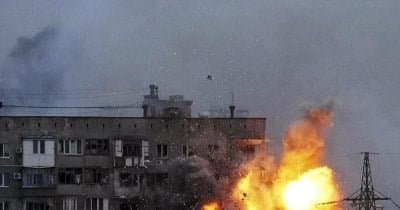
The Russian military's recent escalation in the Donbass region, focused notably on Kostyantynivka in Donetsk Oblast, reveals a pattern of intensified but incremental pressure. Despite increased attacks, Russian forces have not secured the city, illustrating a grinding battleground where advances are measured in meters rather than kilometers. This development shows the complex interplay between tactical persistence and the reality of contested control.
Incremental Gains and Strategic Implications
Kostyantynivka has become the epicenter of Russia's spring-summer 2026 push, reflecting an approach characterized by sustained offensive efforts with modest territorial payoffs. The Defense Ministry's reports of escalated tactics align with a broader strategy to wear down Ukrainian defenses through attrition. However, the absence of a decisive breakthrough suggests that Russian operations continue to face resilient resistance, contributing to a protracted stalemate rather than rapid conquest.
This situation carries significant strategic weight. Should Russian forces succeed in fully capturing Kostyantynivka, the path toward Sloviansk becomes more viable, increasing pressure on Ukrainian territorial integrity in the region. Consequently, the conflict's trajectory may shift, marking a turning point that reverberates beyond the immediate frontline.
Market Signals and Predictive Indicators
The conflict’s progression is mirrored in prediction markets, where sub-sectors related to Russian territorial advances have recently shown increased optimism for a Russian victory in the Donbass by the end of 2026. This suggests that traders and analysts are pricing in a higher probability of successful Russian incursions into key urban centers, affecting geopolitical risk assessments and potentially influencing investment decisions linked to energy and regional stability.
Observers should closely monitor further developments around Kostyantynivka and any official communications from Russian and Ukrainian authorities or international bodies such as the OSCE. Shifts in control or significant battle outcomes will likely prompt immediate market reactions, especially in sectors sensitive to conflict escalation.
also the interplay between military operations and related market movements connects with broader themes of systemic risk and predictive analytics, resonating with insights found in analyses like why $1.6 billion of DeFi liquidity remains idle amid growth, where liquidity and market sentiment interplay under conditions of uncertainty.
This material is informational and not financial advice.