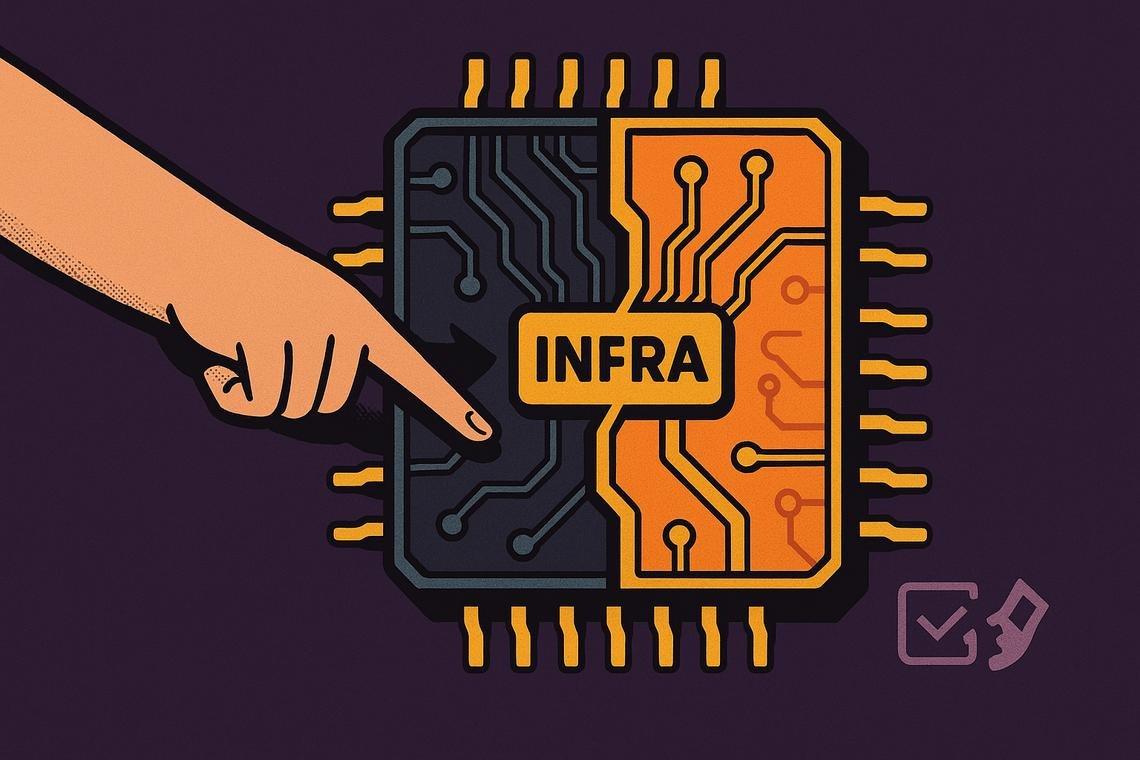
Meta’s ambitious foray into artificial intelligence with its proprietary chip, codenamed “Iris”, marks a pivotal moment not just for the company, but potentially for the broader technology and cryptocurrency landscapes. Set to start production in September 2026, the Iris chip represents Meta’s strategic effort to harness computing power to deliver what CEO Mark Zuckerberg refers to as “personal super intelligence” to billions of users. The potential implications of this initiative extend far beyond Meta's own ecosystem.
By participating in the MTIA program, which stands for Meta Training and Inference Accelerators, Meta aims to produce a series of chips capable of handling complex AI workloads, enhancing functionalities across its platforms from Instagram feeds to AR glasses. The ambitious goal is to reach over 14 gigawatts of computing power by 2027, a significant leap from the projected 7 gigawatts for 2026. For context, this is enough energy to power approximately 10.5 million homes, underscoring the massive computation needs of AI applications.
Interestingly, while Meta collaborates with established players such as Broadcom, AMD, and Nvidia for various components of its infrastructure, the launch of its own chip indicates a strategic shift. Instead of exclusively relying on external suppliers, Meta is positioning itself to lead in the AI space, leveraging in-house capabilities to create tools that integrate directly into consumer products.
The Superintelligence Vision
The launch of the Superintelligence Labs project in mid-2025 links directly to Meta's vision of making AI a utility available to individual users. This is intended to transition AI from being an enterprise-exclusive resource to something that resides within everyday applications. By embedding AI deeply into consumer products like WhatsApp and potentially into new devices, Meta envisions that every user could eventually benefit from a highly sophisticated AI assistant capable of complex decision-making and problem-solving.
Why This Matters for Crypto Investors
While Meta's Iris chip does not directly impact cryptocurrencies since it lacks any blockchain integration or token system, its implications for crypto markets are worth noting. The intersection of AI and cryptocurrency continues to be a rapidly evolving space. With Meta planning to enhance its computing capacity dramatically, firms operating in decentralized computing, such as Render and Akash, are likely to see increased interest. This surge in demand for AI computing capabilities signals a pragmatic validation of their underlying premise: the demand for AI computation may soon far exceed what centralized entities can provide.
As Meta endeavors to build a more sophisticated AI infrastructure, the ripple effects could extend to decentralized computing networks and, by extension, to the cryptocurrency market. Investors should remain cognizant of such developments, as they hint at an increasing integration of AI capabilities across industries.
This material is informative and should not be taken as financial advice.