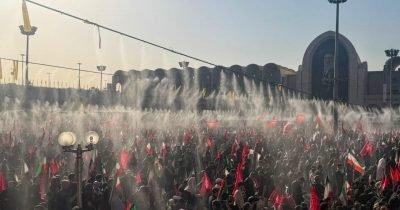
The assassination of Ayatollah Seyyed Ali Khamenei, the Supreme Leader of Iran, has escalated an already tumultuous situation in the region, ushering in a wave of mobilization among the Iranian populace seeking retribution. This incident not only symbolizes a profound change in Iran's leadership dynamics but also poses significant implications for the ongoing conflict that has already strained relations with Western powers.
An Unfolding Political Landscape
In the wake of Khamenei’s death, political maneuvering appears to be intensifying, particularly with the ascension of his son, Mojtaba Khamenei, to leadership. However, the real power dynamics remain uncertain, complicated by the involvement of the Islamic Revolutionary Guard Corps (IRGC). This uncertainty could create an environment ripe for unrest, as economic and social grievances surface amidst the backdrop of increased calls for vengeance against adversaries such as Israel and the United States.
Potential Market Repercussions
As the Iranian people mobilize in the wake of this tragedy, market observers should pay close attention to how these developments influence regional stability. The current pricing reflects a rising probability of a leadership change in Iran by the end of 2026, hinting at heightened political instability that could reverberate through various markets. The market's perception of Iran’s future is delicately poised and may shift in response to further unrest or potential reconciliation attempts with the West.
Future Indicators to Watch
- Shifts in the IRGC leadership or announcements from the Assembly of Experts could signal changes in Iran’s internal power structure.
- Escalations in conflict or diplomatic engagements with Western nations could significantly influence investor sentiment.
- Given the broader implications for geopolitical tensions, developments surrounding Khamenei's successor will be critical in gauging Iran's posture.
The climate surrounding Iran requires close monitoring, as any shifts could have cascading effects across multiple sectors, particularly in relation to military engagements and economic sanctions. The current unrest should not only be viewed as a domestic reaction but rather as a significant catalyst that could redefine Iran’s geopolitical positioning and thereby impact global markets.