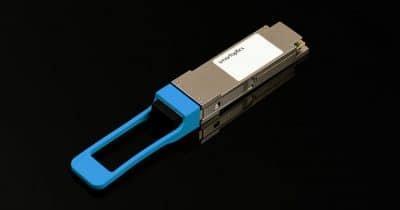
The optical transceiver market, once viewed as a clear beneficiary of the AI infrastructure surge, now faces serious challenges due to recent technological advancements, particularly from Amazon and OpenAI. According to B. Riley Securities, new innovations such as Amazon's Resilient Network Graphs (RNG) and OpenAI's Multipath Reliable Connection (MRC) protocol are likely to have profound impacts on traditional optical transceiver demands.
The Shift in Data Center Architecture
Traditionally, data centers relied on a multi-layered, “fat-tree” architecture where data moved through several switches and routers, necessitating numerous transceivers. With Amazon’s RNG architecture, however, there is a shift towards a flatter, more direct path for data transfer, significantly reducing the number of networking devices by as much as 69%. Such changes result in a 40% decrease in power consumption, and since April 2026, RNG has been adopted as the standard for new AWS data centers.
Furthermore, the MRC protocol by OpenAI allows data transfers over multiple paths at once, ensuring faster connections and instantaneous failovers, reducing the redundancy that characterized traditional designs. This innovation underscores a critical point for investors: as these technologies advance, they could render many legacy systems obsolete, further concentrating demand for high-speed transceivers over conventional ones.
The Economic Implications
The optical transceiver market is anticipated to grow to $112 billion by 2031, with AI-driven segments contributing approximately $26 billion by 2026. However, B. Riley argues that the economic landscape is evolving. Traditional transceiver manufacturers may find themselves in jeopardy as demand shifts towards high-speed transceivers, particularly those operating at 800G and 1.6T capacities. The ramifications of this shift extend beyond mere market capitalization; they could fundamentally alter how data centers operate.
Competitive Advantages and Market Winners
The competitive edge gained from a 40% reduction in power consumption can translate into substantial annual savings across AWS's global data center network, potentially amounting to hundreds of millions of dollars. As RNG and MRC influence more data centers, other cloud service providers will likely follow suit, particularly as MRC has been open-sourced through the Open Compute Project. Those companies focused on innovation in silicon photonics and co-packaged optics will likely emerge as the key players in this evolving landscape, while legacy suppliers may struggle to adapt.
In summary, the transition towards more efficient AI-driven architectures represents not just a technological evolution, but also a significant shift in market dynamics that could leave traditional optical transceiver manufacturers at a distinct disadvantage.