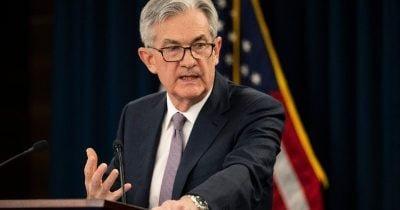
The recent remarks by former Federal Reserve Governor Randy Kroszner, highlighting a significant trust deficit between the Fed and consumers regarding inflation management, underscore vital implications for both economic policy and asset markets, including cryptocurrency.
During his appearance on Bloomberg, Kroszner emphasized the challenges faced by the Federal Reserve, suggesting that the credibility problem could complicate its efforts to manage inflation effectively. This sentiment points to a larger narrative where public confidence in central banking authority directly impacts economic strategies and the behavior of various asset classes.
Kroszner's assertion that interest rates may remain "higher for longer" than expected signals a lack of confidence in controlling inflation. Such a scenario creates a dual-edged sword for investors in the cryptocurrency space. On one hand, higher interest rates increase the opportunity cost of holding non-yielding assets like Bitcoin; while on the other, if these rates indicate a failure to contain inflation, they could reinforce the appeal of hard assets such as cryptocurrencies, which boast capped supplies.
The potential influence of artificial intelligence on labor markets and economic policy adds another layer of complexity. If rapid advancements exert pressure on the traditional job market faster than policymakers can react, the Fed’s conventional metrics for evaluating economic health may become outdated. This precarious balance of economic indicators could further lead to market uncertainty, making consumers and investors wary.
Moreover, the Fed’s historically tenuous political independence could add volatility. Kroszner pointed out that political interference can erode market trust, and when investors perceive such interference, they may recalibrate their expectations and strategies. Such turbulence could impact decision-making and investment trends in the cryptocurrency market, causing fluctuations in demand.
While Kroszner refrained from directly mentioning cryptocurrencies during his analysis, the connection to digital assets is unmistakable. As the crypto market has matured considerably since the last major inflation crisis evidenced by available institutional custody solutions and the trading of spot Bitcoin ETFs the ramifications of Fed policy are more relevant than ever.
Looking ahead, the leadership dynamics at the Fed, particularly as candidates like Kevin Warsh emerge as potential future governors, will also influence policy direction. These transitions often reflect shifts in economic philosophy that resonate throughout financial markets.
As we observe how trust between the central bank and consumers evolves, it becomes clear that these dynamics may significantly shape the landscape for cryptocurrencies and other hard assets.
This material is for informational purposes only and does not constitute financial advice.