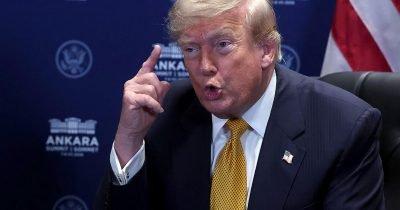
The recent announcement by President Donald Trump declaring the end of the US-Iran ceasefire has injected a wave of instability into financial markets, especially impacting the cryptocurrency sector. Following Trump's statement during the NATO summit in Ankara on July 8, Bitcoin experienced a notable decline of over 3%, settling around the $61,500 mark. This sharp drop is a clear reflection of how quickly geopolitical tensions can affect investor sentiment and, consequently, market movements.
The broader cryptocurrency market also mirrored this downturn; the CoinDesk 20 Index saw a decrease of approximately 2.9%. This drop is significant as it underscores a critical aspect of the crypto landscape: geopolitical events serve as potent catalysts for market fluctuations. Historically, traders have observed that the crypto market's susceptibility to such events often exacerbates volatility, leading to swift sell-offs when fear or uncertainty emerges.
The backdrop to this situation involves US airstrikes against Iranian targets, which were a direct response to Iranian aggression in the Strait of Hormuz an essential passage for global oil trade. With nearly 20% of the world’s oil traversing through this chokepoint, military activities in the region aren't taken lightly by investors. The immediate reaction from Bitcoin and other altcoins signifies that traders are acutely aware of the correlation between geopolitical events and asset performance.
While the ceasefire's conclusion was not unexpected, given the escalating military rhetoric from both sides, the impact on crypto markets can be attributed to the interconnectedness of risk assets. As such, this situation serves as a reminder for traders of the potential for rapid market changes prompted not only by traditional factors like market sentiment or regulatory updates but also by global political developments.
For investors, the decline in Bitcoin's price is a stark reminder of the volatility inherent in the cryptocurrency space. Individuals holding leveraged positions must be particularly attentive to developments in the region. Three key aspects warrant close monitoring: any further military actions in the Strait of Hormuz which could affect oil prices, Iran's actual responses versus its threats, as this could lead to market recalibrations, and Bitcoin's resilience amid these geopolitical uncertainties.
The ceasefire that has just ended was itself the product of intricate negotiations following the Twelve-Day War in June 2025, indicating that the path toward stability remains fraught with challenges. As we observe the unfolding events, it becomes increasingly clear that the interplay between the geopolitical landscape and the crypto market will continue to shape investor strategies and asset prices in unprecedented ways.
This material is for informational purposes only and does not constitute financial advice.