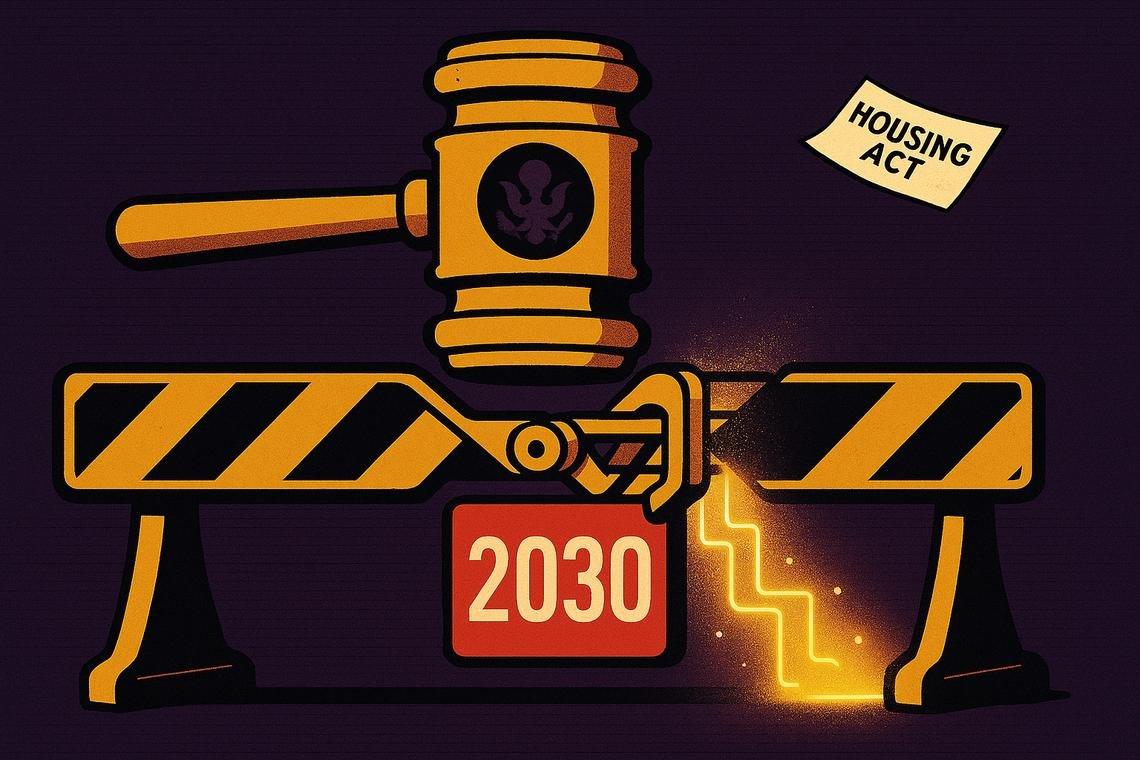
The recent enactment of a four-year prohibition on the issuance of a U.S. central bank digital currency (CBDC) tucked within the 21st Century ROAD to Housing Act marks a critical juncture in American monetary policy. While this legislative maneuver seems buried within a housing bill focused on increasing affordability and cutting regulations, its implications for the financial landscape and regulatory environment are profound.
Context: A Surprising Legislative Challenge
This ban, effective until the end of 2030, prohibits the Federal Reserve from introducing a digital dollar. Interestingly, this provision was inserted by Republicans as a secondary concern amidst wider housing affordability discussions, reflecting a strategic approach to bypass direct opposition typically faced by standalone crypto regulation initiatives. The absence of explicit support for a digital dollar by previous Federal Reserve leadership and the lack of congressional authorization have long hindered progress towards a CBDC, making this ban significantly impactful.
Details: What This Means for the Crypto Landscape
Critically, the ban does not simply halt potential developments in digital currencies; it serves to solidify the crypto industry’s stance against a federally issued CBDC. Advocates argue that a digital dollar could undermine the market for privately issued stablecoins, which have proliferated in recent years. The Federal Reserve has signaled a cautious approach towards a CBDC, indicating such an initiative would necessitate broad political and public support conditions that remain elusive.
The insertion of this ban into such an unrelated bill could set a precedent for how future regulations are crafted, particularly for sectors like crypto that may be perceived as politically contentious. As the Federal Reserve must now adhere to this prohibition, the broader implications for digital asset markets and investor sentiment cannot be understated.
Consequences: Short and Long-Term Effects
In the short term, the ban might deter innovation within the U.S. financial ecosystem, inhibiting the development of blockchain-based solutions and digital currency integration in mainstream financial systems. Investors and companies within the crypto domain could see this as a red flag, potentially impacting market confidence and investments. Over the long term, the prohibition highlights the challenges of navigating the evolving landscape of digital finance, wherein traditional institutions might lag behind more agile technological firms.
As we approach the ban’s expiration in 2030, it remains to be seen how public sentiment surrounding digital currencies will evolve and whether the regulatory framework will adapt accordingly. The outdated nature of policymaking methods, exemplified by this housing bill maneuver, may force a reevaluation of how legislation addresses evolving technologies in financial markets.
This material is for informational purposes only and does not constitute financial advice.