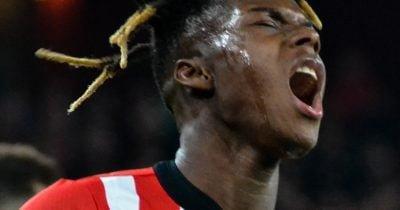
Nico Williams, Spain’s promising winger, has successfully returned to the pitch, setting his sights on the coveted 2026 FIFA World Cup title. His recovery from a left hamstring strain that threatened to end his season early highlights not just the athlete’s determination but also the growing intersection of sports and cryptocurrency that has captured considerable attention lately.
As Williams looks to shine on the world stage, he generates waves in the crypto space, especially through the emergence of Solana-based fan tokens, $NICO and $YAMAL, linked to himself and teammate Lamine Yamal. These tokens are characterized by their low market caps, under $10,000, which positions them as high-risk speculative assets rather than reliable investment options. Market liquidity for both tokens is practically non-existent, indicating that even slight shifts in interest can trigger substantial price fluctuations. This context raises questions about the sustainability and meaningful engagement that fan tokens can provide, as they exist more as experimental blockchain assets than as authentic fan engagement tools endorsed by established clubs or leagues.
The true turning point for the crypto industry can be found in Kraken’s recent announcement as FIFA’s official crypto exchange supporter during the World Cup. This partnership represents a pivotal moment for cryptocurrency, as it marks the first time FIFA has officially aligned with a crypto exchange of Kraken's stature. As a well-regulated exchange, Kraken's involvement lends a level of institutional legitimacy that the broader crypto market has sought for years. By placing a recognizable crypto brand in the midst of one of the world’s most widely viewed sporting events, the partnership is set to elevate the profile and acceptance of cryptocurrencies in mainstream culture.
This juxtaposition of Kraken's institutional presence and the grassroots nature of tokens like $NICO and $YAMAL underscores the two distinct layers of the sports-crypto relationship. On one hand, Kraken represents a professional, regulated framework aiming for brand visibility within major events. On the other hand, the low-cap fan tokens reflect a speculative frontier with less tangible backing and community support. This contrast could ultimately shape the future landscape of crypto in sports, influencing how the market perceives value and engagement.
As we move forward, the success of Kraken's partnership could potentially spark greater interest in regulated crypto offerings and expand the use of fan tokens, despite their current volatility and risks. If the synergy between traditional sports and cryptocurrencies continues to grow, we might witness a transformative shift in how fans interact with their favorite teams, players, and the crypto assets associated with them. This evolution could redefine avenues for investment but also necessitate greater scrutiny regarding their legitimacy and functionality in the coming years.
This material is informational and should not be considered financial advice.