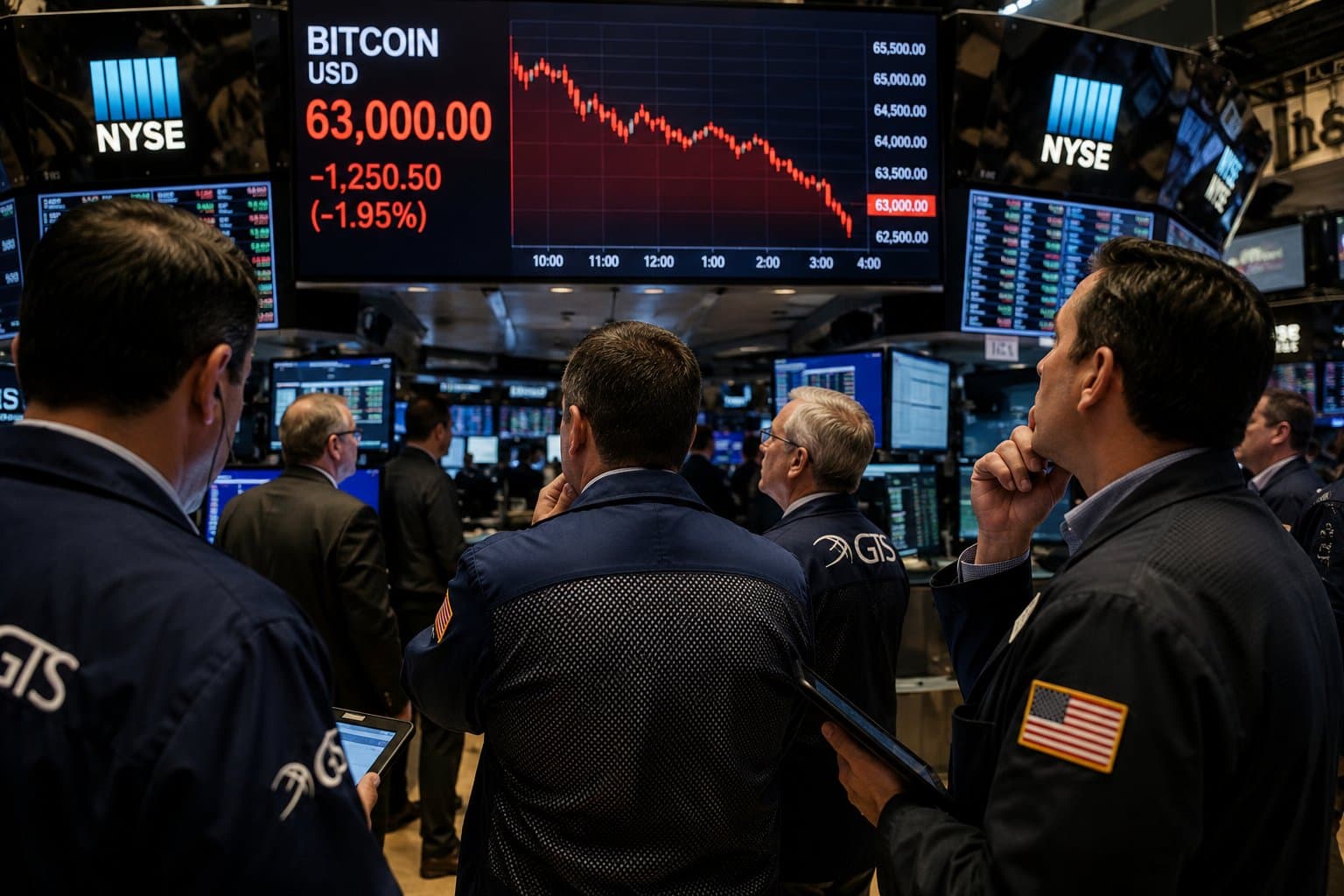
Bitcoin's recent dip below $63,000 serves as a reminder of how closely the cryptocurrency market is tied to global events. The cryptocurrency's price has been adversely affected by renewed geopolitical tensions in the Middle East, particularly following the U.S. military's strikes against Iranian targets. This military action not only escalates regional conflicts but also shifts investor sentiment towards safer assets, diminishing the appetite for riskier investments like Bitcoin.
The situation is compounded by events surrounding the Strait of Hormuz, a vital shipping route for oil. As Iran's Islamic Revolutionary Guard Corps (IRGC) continues to threaten commercial vessels and hinted at closing the strait, fear of supply disruptions has led to a surge in oil prices, with West Texas Intermediate (WTI) crude soaring above $75 per barrel. This risk-off environment has caused a wave of selling pressure on cryptocurrencies, nudging Bitcoin lower than critical support levels.
Interestingly, despite the bearish market sentiment, we see a glimmer of hope in institutional interest, as U.S. spot Bitcoin ETFs recorded $197.4 million in net inflows last week, ending an eight-week streak of outflows. This uptick indicates that institutional investors remain optimistic about Bitcoin's long-term potential, even as immediate market conditions remain shaky. However, the prevailing uncertainty surrounding geopolitical developments has overshadowed these inflows, limiting their positive impact on Bitcoin's price.
Currently, Bitcoin is trading around $63,055, still beneath the critical $64,000 resistance level. The cryptocurrency remains below its major exponential moving averages, reflecting a bearish market structure. The tension between institutional buying signals and geopolitical risks will be crucial to monitor in the coming days as they could dictate whether Bitcoin can reclaim its position above key resistance levels.
This material is for informational purposes only and should not be considered financial advice.