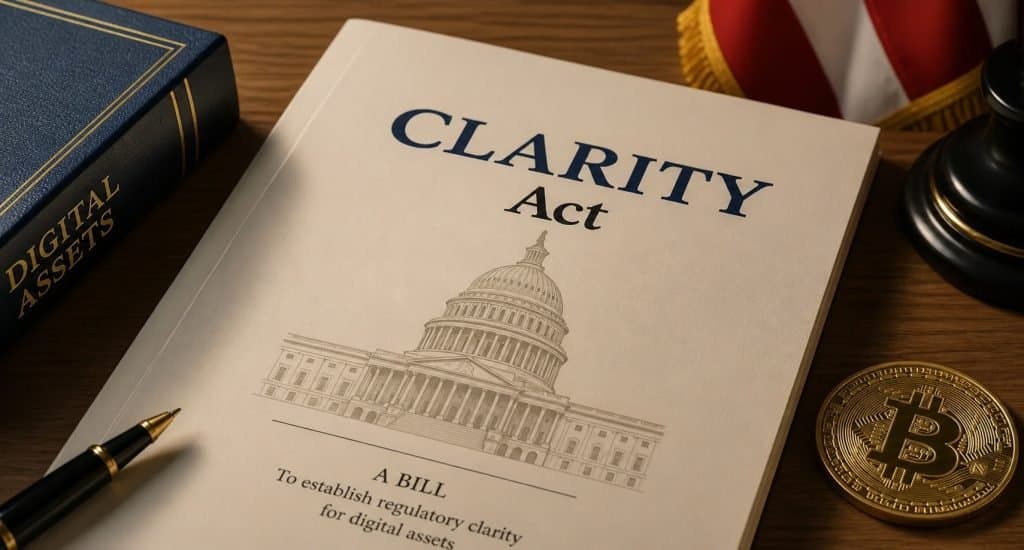
The Clarity Act, designed to impose structured regulations on the US cryptocurrency market, gained momentum recently but encounters sharp resistance over its ethics enforcement framework. Discussions between Republican and Democratic senators focus on ethical standards and decentralized finance rules that could fundamentally redefine regulatory oversight.
Sticking Point in Enforcement Mechanics
Senator Cynthia Lummis highlighted positive executive engagement, with the White House presenting an ethics document to some Republican lawmakers. Yet, Democratic Senator Angela Alsobrooks criticized the proposal to delegate enforcement responsibilities exclusively to the Department of Justice. She labeled this approach "frivolous" and threatened to withhold support if accountability remains centralized, emphasizing the need for multi-agency oversight including state attorneys general. This tension shows the delicate balance lawmakers face between centralized federal control and distributed enforcement across states.
Negotiations and Market Implications
Senate Majority Leader John Thune acknowledged a "good chance" for resolving differences but cautioned that success hinges on securing enough Democratic votes. Alsobrooks' conditional support, contingent on strong ethics provisions, signals that the final bill may emerge significantly altered if bipartisan consensus is to be achieved. For market participants, these developments are consequential:
- Centralization of enforcement could streamline procedures but risks politicizing regulation.
- Inclusion of solid ethics rules can enhance investor confidence, attracting institutions wary of regulatory ambiguity.
- Prolonged negotiations may delay regulatory clarity, maintaining volatile environments for DeFi and broader crypto assets.
debates highlight the rising importance of ethics in crypto governance alongside financial stipulations, a dynamic likely to influence subsequent discussions on standards and compliance frameworks. For a deeper view on ethics in crypto regulation, see how ethics concessions on Trump’s crypto holdings could shift Senate crypto law.
This material is informational and does not constitute financial advice.