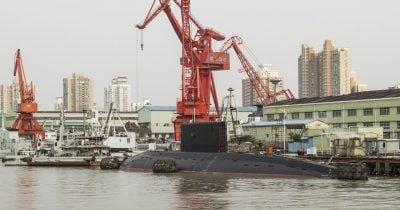
China's recent test of a nuclear missile launched from a submarine marks a decisive evolution in its military capabilities. The JL-3 missile, launched from a Type-094 (Jin-class) submarine, reportedly achieved a range exceeding 10,000 kilometers, establishing a new level of deterrence for Beijing and raising substantial concerns regarding regional stability.
This test, which showcased the missile's trajectory over the South China Sea and into the South Pacific Nuclear Free Zone, indicates a significant step toward operationalizing China's sea-based nuclear deterrent. By enhancing its second-strike capabilities, China positions itself as a formidable power, potentially deterring interventions in volatile scenarios, most notably concerning Taiwan.
Regional Security Ramifications
Countries such as Australia, New Zealand, Japan, and the Philippines have expressed alarm at this advancement. The test is perceived as a destabilizing factor in an already tense geopolitical landscape, especially against the backdrop of escalating military drills like Joint Sea 2026 with Russia. Additionally, following a land-based ICBM test in September 2024, it suggests a systematic acceleration of China’s nuclear ambitions aimed at achieving strategic parity with the United States.
Market Reactions and Future Outlook
Market analysts are already pricing in a perceived increase in the risk of military confrontation between China and Japan, currently estimated at 5.5% likelihood by the end of 2026. This highlights a growing unease about potential military clashes in the region as China's military posture continues to evolve. Observers will be particularly vigilant regarding subsequent military tests or strategic exercises that may further inflame tensions.
- China's submarine missile test enhances its nuclear deterrent capabilities.
- Regional nations are increasingly concerned about security destabilization.
- Market pricing reflects heightened fears of a conflict prior to 2027.
The implications of these developments are wide-ranging, not just for the countries directly involved but also for global markets as perceived conflict risks rise. The military dynamics could also spark a reassessment of alliances and defense strategies in the Asia-Pacific region. Additionally, diplomatic efforts, such as potential agreements surrounding a ‘Code of Conduct’ between Japan and China, will be critical in shaping future interactions and market sentiments.
This material is informational and should not be considered financial advice.