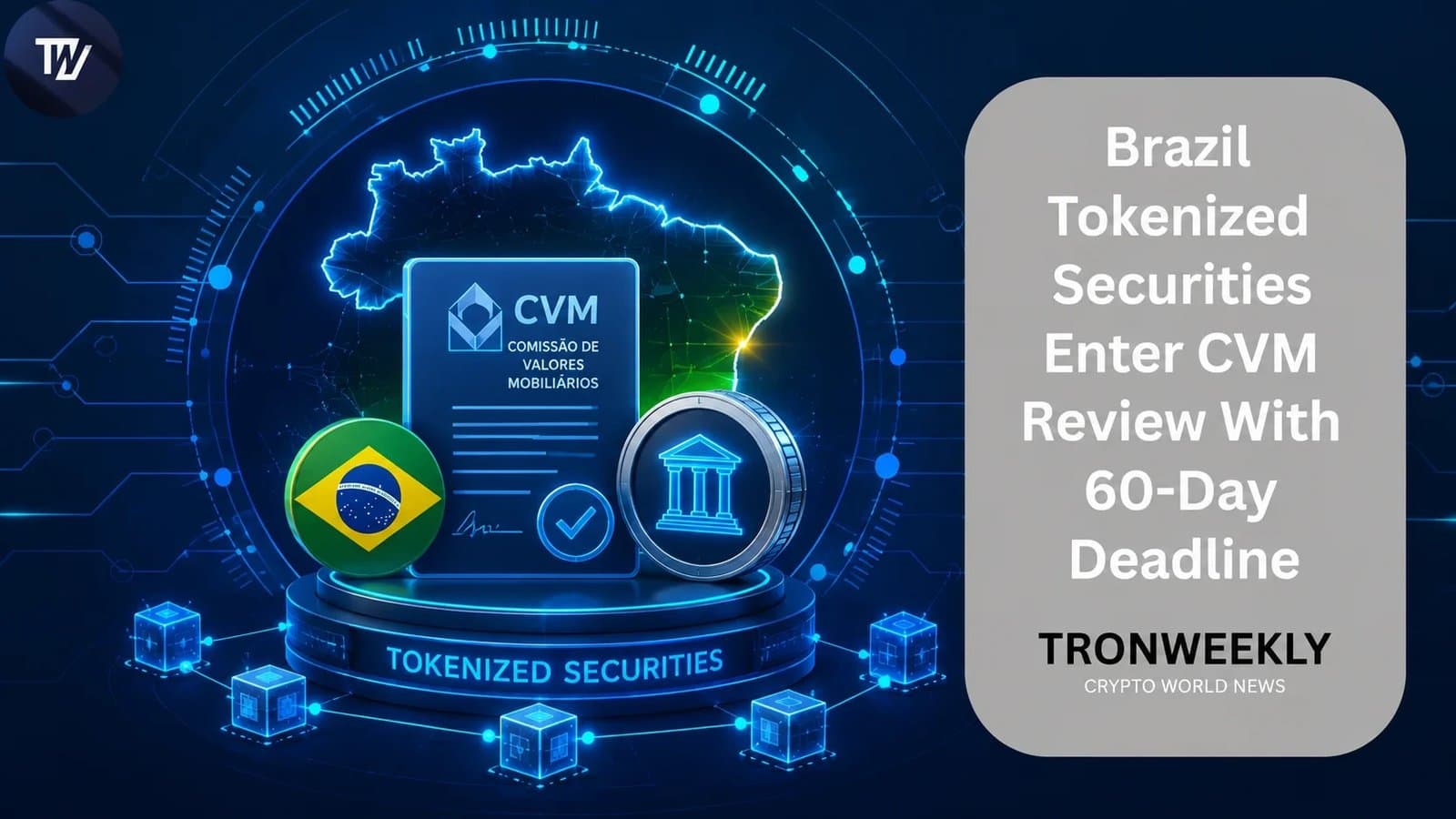
Brazil’s securities regulator, the Comissão de Valores Mobiliários (CVM), has formally set a tight 60-day deadline for delivering an experimental regulatory framework addressing tokenized securities. This move marks a critical inflection point for one of the country’s most promising digital asset sectors. A 14-member working group, known as the Securities Tokenization Working Group (GTT), was established specifically to navigate the legal and operational challenges posed by blockchain-based securities issuance and management.
The ambitious timeline demands the GTT present initial regulatory proposals within two months, followed by a full review within 120 days. This accelerated schedule reflects the CVM’s recognition that tokenization is not simply a niche innovation but a fundamental market shift requiring urgent regulatory clarity. The group’s mandate extends beyond a single blockchain or token type; it will assess how tokenized securities align with existing Brazilian financial regulations, cybersecurity standards, custody, trading, settlement, and operational risk frameworks.
Brazil’s current environment allows digital securities issuance only through crowdfunding regulations, but the potential market value for tokenized assets is projected to exceed $740 million. Such scale underlines why the CVM prioritizes this initiative. The working group will also benchmark Brazil’s approach against international regulatory experiments and sandbox outcomes, potentially conducting controlled trials to observe real-world market dynamics under proposed regulations. This practical testing could unveil gaps or frictions in the existing legal framework, informing necessary reforms.
Stakeholders involved range from 14 CVM departments to external experts and government bodies, ensuring a multi-disciplinary perspective. CVM President Otto Lobo emphasized that tokenization demands regulatory innovation commensurate with its transformative impact. The CVM’s proactive stance signals Brazil’s intent to become a frontrunner in integrating blockchain technology with capital markets, potentially attracting broader institutional interest.
The regulatory clarity anticipated from GTT’s work will likely influence investor confidence and market adoption, addressing uncertainties that currently limit participation. For crypto market participants, this could mean more standardized custody solutions, improved compliance practices, and clearer legal recourse. The CVM’s approach contrasts with jurisdictions still debating tokenization’s place in their financial ecosystem, positioning Brazil as a testing ground for pragmatic, innovation-friendly regulation.
This material is informational and does not constitute financial advice.