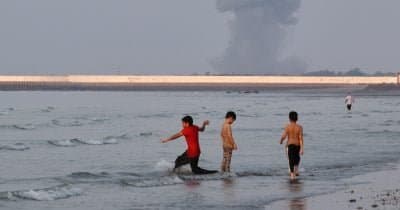
On July 22, 2026, fire broke out at the bow of the Saudi-owned vessel Encelia after a reported attack in the Red Sea, according to the Saudi state news agency. All crew members survived.
The strike fits a pattern that has been building for months: Houthi forces targeting commercial ships with Saudi links, framing the attacks as retaliation for what they describe as a blockade of Yemeni waters.
What makes this incident different from earlier episodes is the directness of the hit. A bow fire on a vessel in transit is not a warning shot; it is operational damage, and it signals a willingness to escalate beyond harassment.
The Bab el-Mandeb Strait is the chokepoint that matters most here. Roughly 10 percent of global seaborne trade passes through it, and any credible threat to that corridor ripples immediately into freight rates and war-risk insurance premiums. Oil markets have already been pricing in Red Sea disruption risk, and the Encelia incident adds another data point pushing that probability higher.
Prediction market pricing has shifted toward YES outcomes on Bab el-Mandeb closure scenarios, consistent with what market-implied odds showed before the attack. That kind of signal is worth watching because it aggregates information faster than official statements do.
The indicators most worth tracking now are formal Houthi announcements about navigation suspensions or exclusion zones, any operational response from the UKMTO or the U.S. Navy's Fifth Fleet, and the behavior of insurance underwriters. If Lloyd's syndicates begin withdrawing coverage or spiking premiums for the southern Red Sea corridor, that is a market confirmation of structural risk, not just episodic violence.
Shipping operators already rerouting around the Cape of Good Hope are absorbing an extra 10 to 14 days per voyage. Each additional attack strengthens the business case for that detour, but it also raises costs for every consumer at the end of the supply chain.
The Encelia attack is not an isolated flare-up. It is one more increment in a slow-moving crisis that has already reshaped how freight moves between Asia and Europe, and the cost of that reshaping keeps compounding.
This article is for informational purposes only and does not constitute financial or investment advice.