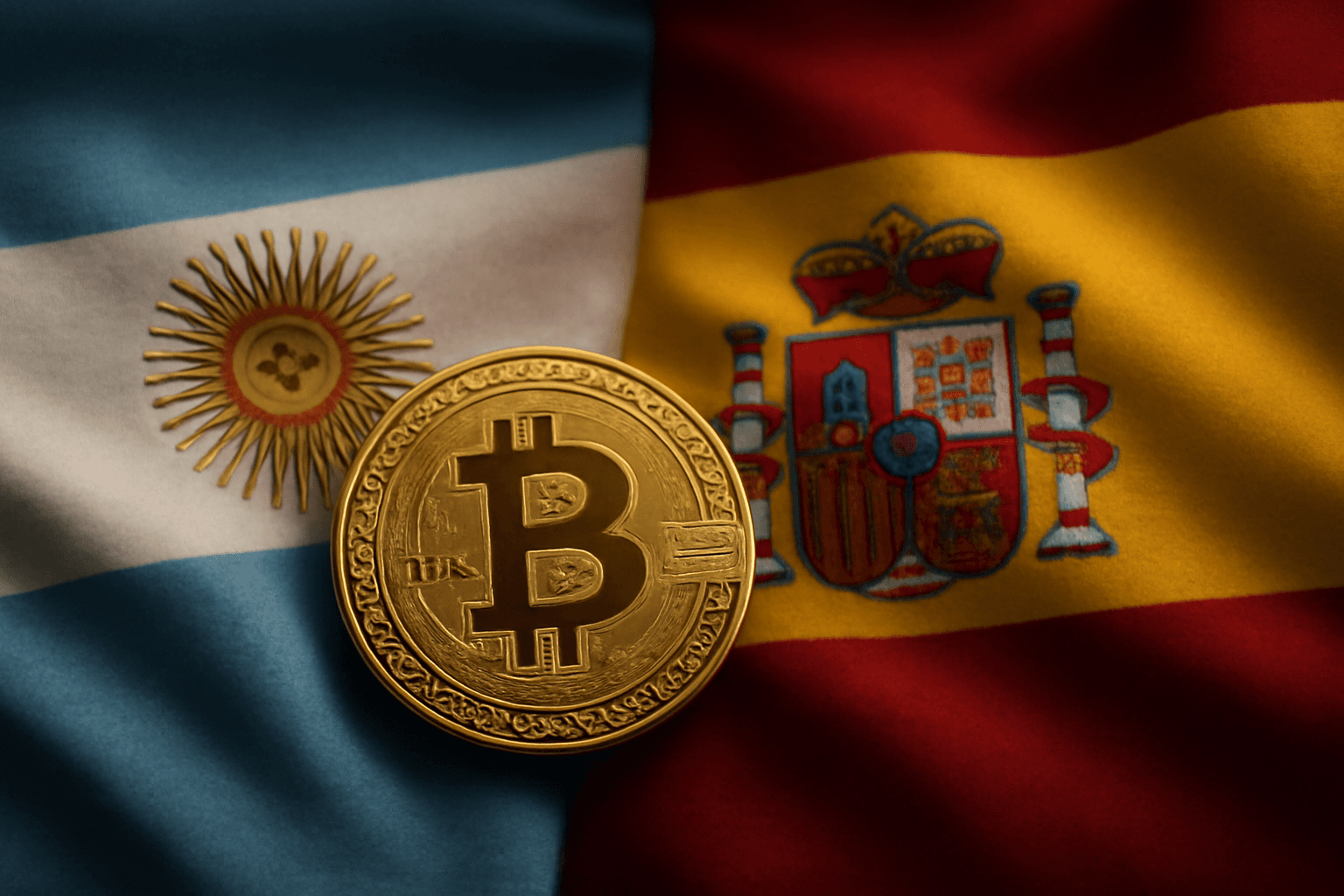
Argentina’s crypto landscape is shaped profoundly by economic hardship, where cryptocurrencies evolved from mere investment assets into essential financial tools. The nation processes between $91 and $94 billion in on-chain transactions from July 2024 to June 2025, making it Latin America’s second-largest crypto market after Brazil. Over 10 million Argentines actively use crypto wallets, with stablecoins accounting for more than 60% of transactions. This widespread adoption is driven by persistent inflation and peso depreciation, prompting citizens to turn to digital assets as a safeguard against currency devaluation.
In contrast, Spain’s crypto market thrives under the European Union’s structured regulatory framework. With expectations of over 25 million users by 2026 and market volume projected to lift from approximately $40 billion in 2024 to $92 billion by 2033, crypto in Spain primarily serves investment and digital payment purposes rather than as a replacement for traditional money. This difference in motivation highlights how Spain’s adoption is more optional and embedded within a regulated financial system, offering stability and long-term growth prospects.
Regulatory Landscape and Market Implications
Spain’s alignment with the EU’s Markets in Crypto-Assets (MiCA) regulation provides crypto businesses with a unified legal framework, facilitating cross-border operations across EU member states. The ability for a company licensed in Spain to operate throughout the union lowers entry barriers and enhances market scalability, attracting institutional participation through enhanced tax reporting and oversight mechanisms. This regulatory maturity positions Spain as a stronghold for crypto enterprises seeking stability and growth in a predictable environment.
Argentina, meanwhile, launched its Virtual Asset Service Provider (VASP) registration in 2024, imposing anti-money laundering requirements and transaction record-keeping. However, this framework remains nascent and is developing in parallel with President Javier Milei’s broader economic reforms. Argentina’s regulatory approach prioritizes balancing oversight with fostering innovation and economic liberalization, reflecting its unique macroeconomic challenges and opportunities.
Both nations host leading global exchanges such as Binance, Coinbase, Kraken, and Bitget, ensuring broad market accessibility. Spain’s regulatory framework, however, offers exchanges a distinct advantage in market reach due to the EU passporting system under MiCA, enabling scalable operations beyond its borders. Argentina compensates with innovative use cases emerging from urgent economic needs.
This juxtaposition illustrates how crypto ecosystems evolve differently based on economic and regulatory contexts. Argentina demonstrates crypto’s potential as a financial necessity amid instability, while Spain exemplifies how structured regulation fosters institutional trust and market scalability. Investors and market participants must consider these distinctions when assessing opportunities, as adoption driven by necessity versus investment appetite can significantly influence market dynamics and regulatory expectations.
This material is informational and does not constitute financial advice.