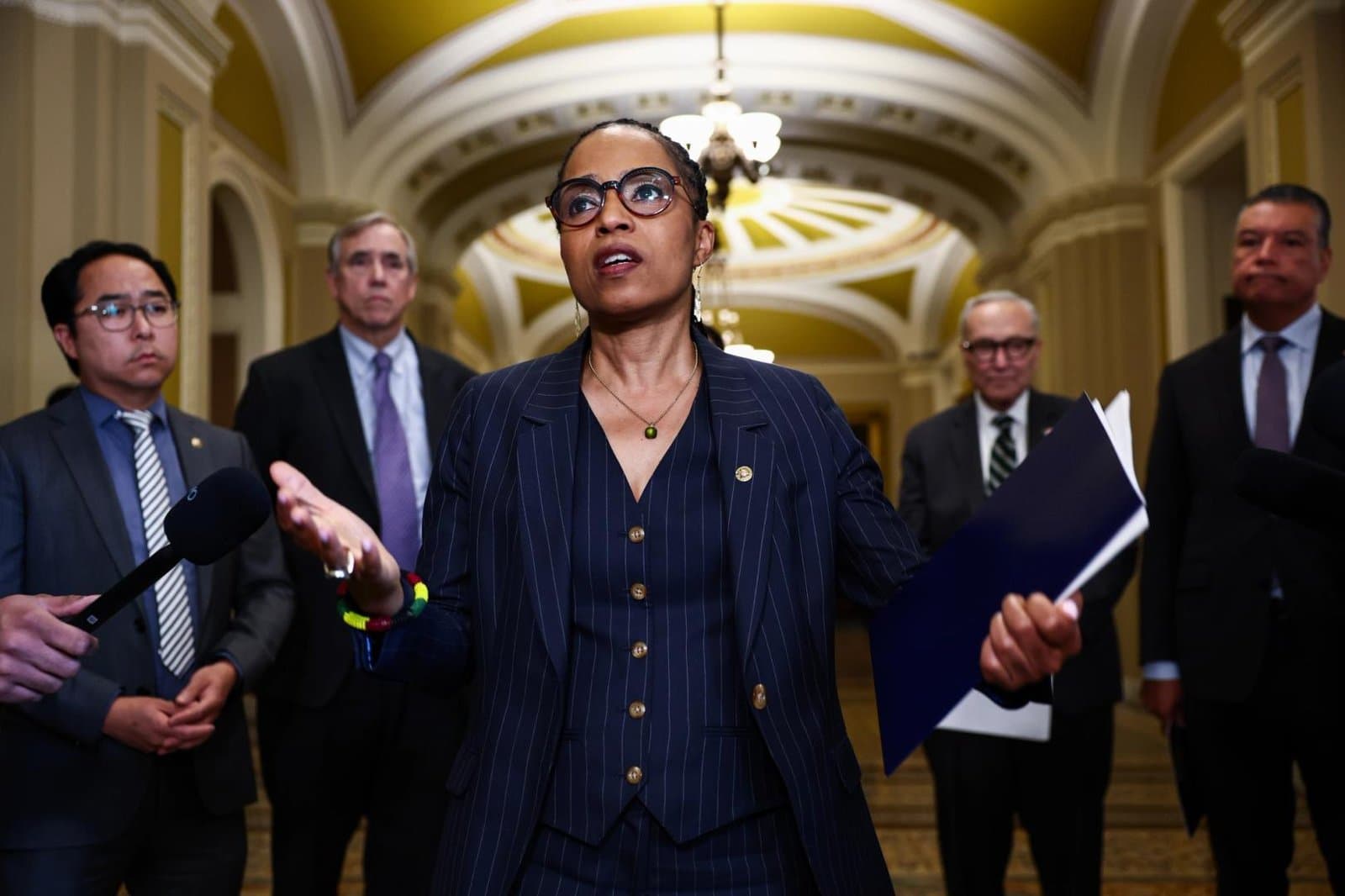
$1.2 million wagered on fire outcomes during the Los Angeles wildfires in January 2025. That number alone captures what Democratic senators now see as a problem: prediction markets tied to natural disasters, where traders profit when blazes spread farther and burn longer. A group led by Sen. Jeff Merkley of Oregon filed a formal request with the Commodity Futures Trading Commission in early August 2026 to restrict or eliminate these contracts entirely.
The argument centers on incentive structure. If someone can make money betting that a fire will consume more acreage or take weeks longer to contain, the reasoning goes, financial reward might eventually nudge someone toward arson. It's a logical concern. It's also purely theoretical. No confirmed cases of prediction market activity triggering actual fire-setting have surfaced anywhere.
Where the betting actually happens
Here's the regulatory oddity: major US-regulated platforms aren't the problem. Kalshi, which fought the CFTC in court and won the right to offer election contracts, doesn't list wildfire-specific markets. Polymarket, the blockchain-based prediction platform that became mainstream during the 2024 presidential race, steers clear of fire betting in its US-facing operations. The $1.2 million in wagers senators reference came from offshore platforms sitting largely outside CFTC jurisdiction anyway. Regulators can't easily touch what they don't control.
Meanwhile, a play-money platform called Wyldfyre launched recently with California wildfire predictions as its focus. No real money moves. It's designed to capture crowd-sourced forecasts without financial stakes, sidestepping the entire ethical problem through structural design.
The core tension prediction markets can't escape
This dispute exposes something fundamental about how prediction markets work. They're most accurate and useful when they cover events with genuine real-world impact. But that's precisely when they become ethically loaded. Election markets work because elections matter. Wildfire markets work, from a forecasting angle, for the same reason. The senators are essentially asking regulators to choose between accuracy and risk mitigation, knowing both can't coexist here.
The CFTC now faces pressure to act during what lawmakers describe as another record-breaking fire season. Whether restricting markets that currently operate outside US jurisdiction will meaningfully reduce arson risk remains unclear. But the request signals that prediction markets, once niche trading instruments, now draw enough attention and capital that policymakers feel compelled to intervene.
Senators want the CFTC to ban wildfire betting after $1.2 million in wagers during January's LA fires, though no arson has been linked to prediction markets so far.