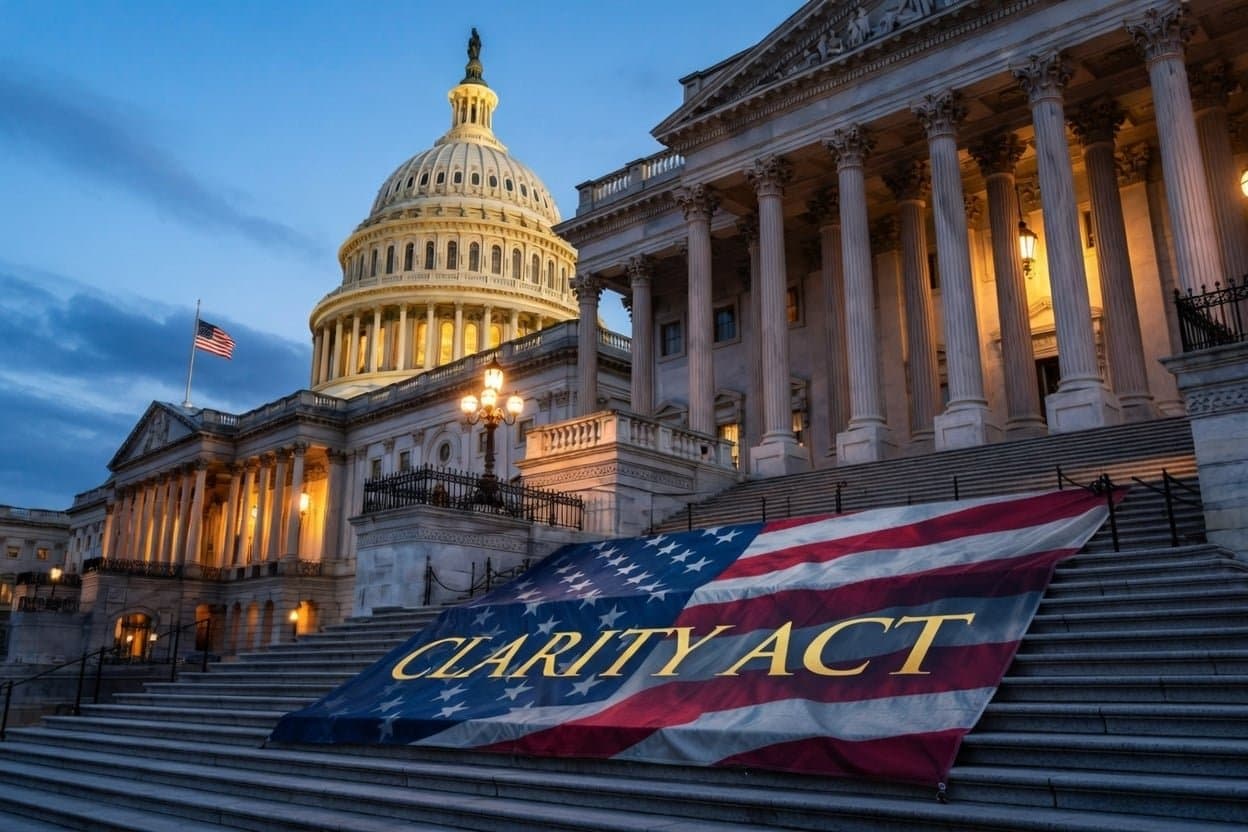
With less than two weeks remaining before the US Senate's August recess, the fate of the CLARITY Act is poised to reshape how the crypto sector, especially tokens like XRP, will be regulated for years to come. Senator Cynthia Lummis's warning is stark: failing to pass this bill now could push well-defined digital asset regulation to 2030. The urgency stems not only from timing but from an emerging political standoff that could stall progress indefinitely.
The CLARITY Act aims to end the long-standing practice of "regulation by enforcement" by setting explicit definitions that classify digital assets distinctly. It separates digital commodities, which would fall under the Commodity Futures Trading Commission's (CFTC) oversight, from investment contracts overseen by the Securities and Exchange Commission (SEC). This delineation is critical: it promises to impose clearer rules on decentralized assets while preserving securities laws for what truly qualify as securities. For an industry plagued by ambiguity, this brings a much-needed framework.
For XRP holders in particular, this could be transformative. Years of uncertainty have limited institutional involvement with XRP due to inconsistent regulatory treatment and legal disputes. The CLARITY Act would clear the fog, enabling easier institutional custody solutions and smoother exchange listings. The pathway to popular products like ETFs for XRP and similar tokens such as Stellar (XLM) and Hedera (HBAR) becomes more viable. This structural clarity could spur broader adoption and unlock significant new capital flows.
Yet, the voting process itself faces complications. A concurrent ethics dispute over crypto holdings threatens to delay the bill’s progress. Recent updates indicate no scheduled vote and unresolved provisions, fueling skepticism about whether the Senate can act before the recess. Market observers dub this moment as a litmus test for Washington’s capacity to handle crypto regulation effectively amid partisan complexities.
Highlighting consumer protection as a core rationale, Senator Lummis emphasized how failures like Celsius and Voyager exposed depositors to unexpected risks when customer assets became part of bankruptcy pools. The CLARITY Act would redefine customer deposit protections, a move expected to bolster investor confidence.
Should the bill pass, it could close a chapter of regulatory limbo that has so far deterred institutional ventures. On the flip side, any delays risk stretching uncertainty for years, impacting investor sentiment and market growth potential. This dynamic poses a direct challenge for crypto stakeholders relying on regulatory clarity to justify large-scale commitments. The timing and outcome carry substantial consequences for XRP’s role within the broader crypto ecosystem as it navigates legal battles and market positioning.
This material is informational and does not constitute financial advice.