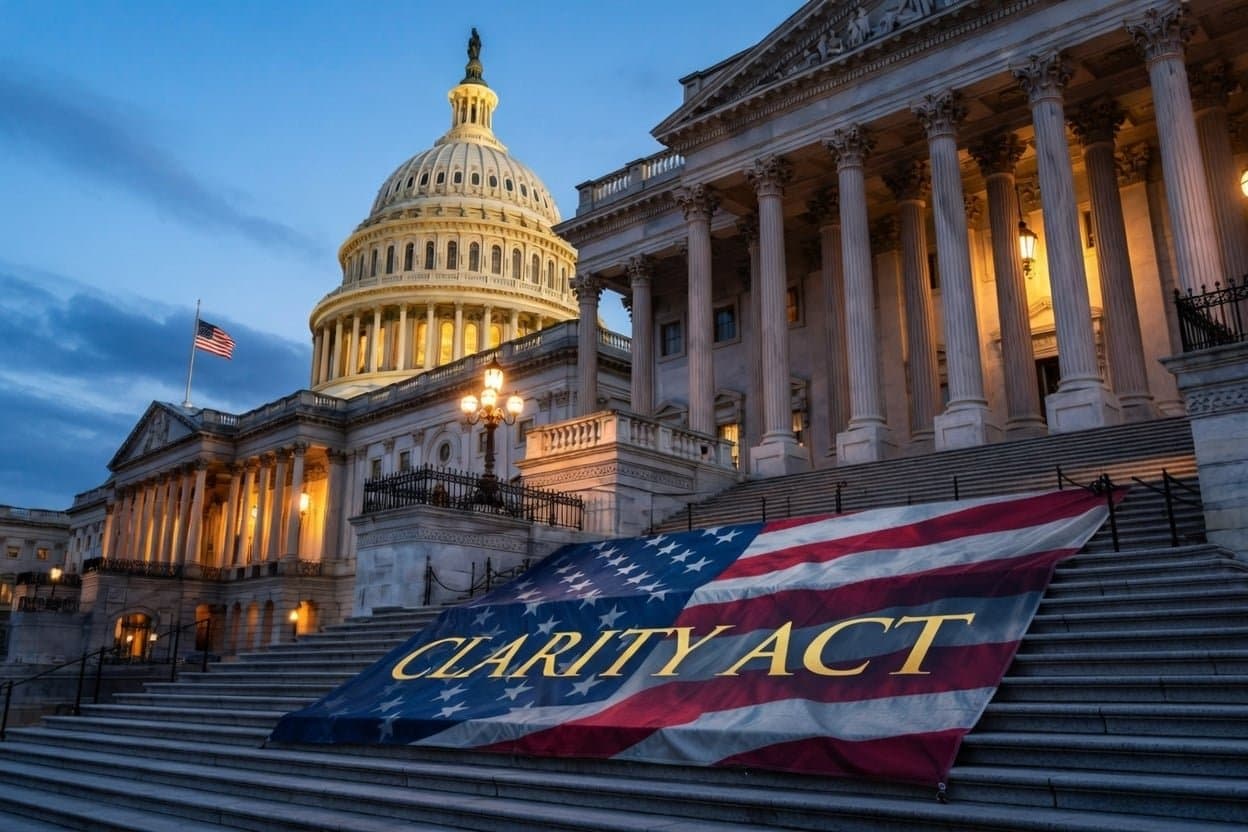
President Trump’s recent agreement to an ethics provision within the Digital Asset Market CLARITY Act removes a critical obstacle that had stalled the legislation for months. This concession opens the door for the Senate to vote on what could become the most full federal crypto regulatory framework in US history.
According to reports by The Block, the ethics provision aims to restrict how top federal officials including the president, vice president, and members of Congress can personally profit from digital assets while holding office. The clause was a major sticking point due to revelations that Trump earned millions from memecoins and ventures tied to his family’s firm, World Liberty Financial. These financial disclosures sparked debate around potential conflicts of interest, prompting lawmakers to demand stricter guardrails.
The long negotiation culminated after a July 16 meeting involving Trump, Republican Senators Bernie Moreno and Cynthia Lummis, and White House crypto advisor Patrick Witt. With this key compromise reached, the bill is poised for a Senate vote by early August. If approved, it will return to the House before potentially landing on Trump's desk for signature.
Implications for Crypto Market Structure and Investor Protections
The CLARITY Act proposes the first federal-level digital asset regulation, assigning oversight jointly to the Securities and Exchange Commission and the Commodity Futures Trading Commission. This dual-agency approach reflects the complex nature of crypto markets, which straddle securities and commodities classifications, thereby aiming to reduce regulatory ambiguity that has plagued the industry.
Democratic lawmakers used negotiations to strengthen customer protections, a move highlighted by Coinbase vice chair Ryan VanGrack. He noted that Democrats prioritized safeguarding consumers, an element likely to reassure retail investors wary of the crypto sector’s volatility and past instances of fraud.
This development may redefine regulatory dynamics by balancing market innovation with accountability. However, the delayed release of the final bill text and absence of a scheduled floor vote indicate ongoing intra-party deliberations. The bill’s progress will be closely watched as it sets a precedent for subsequent regulations impacting market participants and mainstream adoption.
This material is informational and does not constitute financial advice.