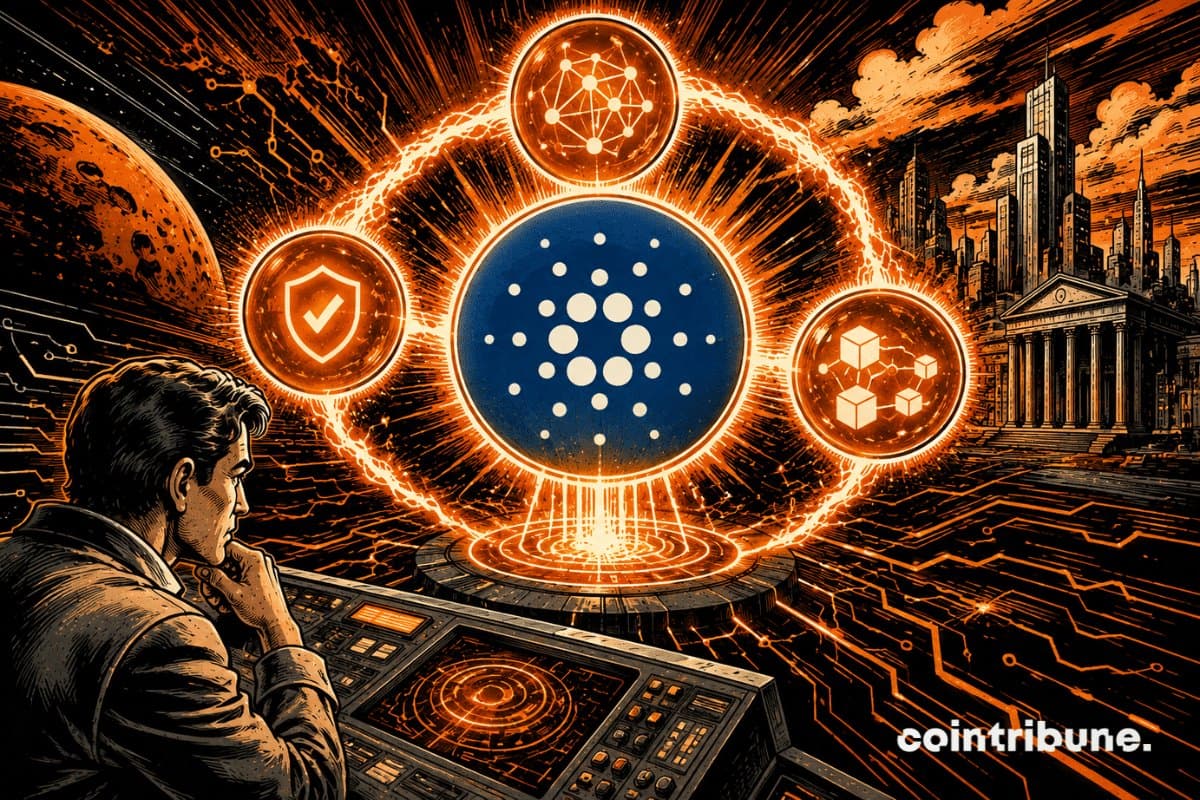
The Dijkstra hard fork is poised to reshape Cardano, introducing three major features designed to boost network efficiency and scalability. Planned for phased deployment starting in 2026, this upgrade builds on groundwork laid by the recent van Rossem hard fork.
Foundations Set by van Rossem Upgrade
Activated on July 18, the van Rossem intra-era hard fork upgraded Cardano’s protocol to version 11. It enhanced Plutus script execution, reinforced ledger consistency, and improved node security. More crucially, it established the technical basis for the upcoming Dijkstra era, signaling a new chapter in Cardano’s evolution driven by community governance.
Dijkstra Fork’s Three Core Innovations
The first phase will implement Nested Transactions, allowing transactions to be embedded within each other. This optimizes resource use and reduces network congestion, a critical step for handling increased activity without compromising speed.
Next comes Linear Leios, a refined iteration of Cardano’s Ouroboros Leios consensus protocol. This upgrade aims to significantly increase transaction throughput and finality times while preserving Cardano’s hallmark decentralization and security.
Finally, the Peras upgrade will enhance transaction finality, making confirmations faster and more reliable. Together, these changes are expected to strengthen Cardano’s capacity to support complex decentralized applications and large-scale use cases.
The Dijkstra era continues Cardano’s commitment to on-chain governance, with ADA holders actively involved in shaping future updates. This approach aligns with the network’s vision of decentralization and community-driven development.
This content is for informational purposes and does not constitute financial advice.