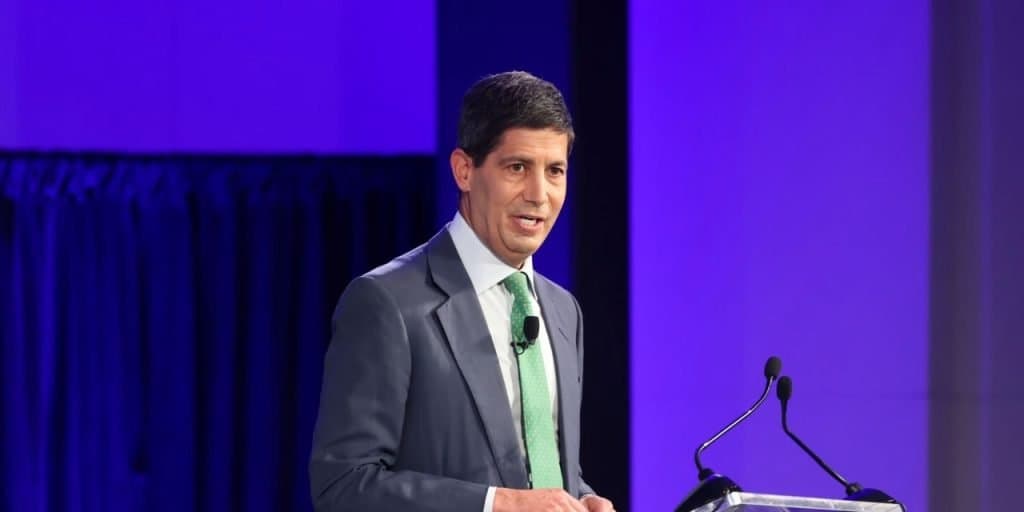
Michael Barr, the Federal Reserve's Vice Chair for Supervision, recently delivered a stark warning regarding the rising tide of artificial intelligence (AI) and its uneven benefits. During a speech on February 17, 2026, Barr highlighted that while AI has the potential to enhance productivity across various sectors, its advantages are likely to be concentrated among those companies and workers who already possess premium access to advanced tools.
According to Barr, projections suggest that AI could contribute between 0.3 and 0.9 percentage points to annual total factor productivity growth over the upcoming decade. This significant increase in productivity, however, raises critical questions about equity. Companies that can invest heavily in enterprise-grade AI systems will reap the most rewards, thereby widening the gap between resource-rich organizations and smaller firms unable to make similar investments.
The Shift from Layoffs to Retraining
Interestingly, recent findings from a November 2025 survey conducted by the New York Fed, which Barr referenced, indicate that firms are not only optimistic about AI’s productivity promise but are also prioritizing retraining their existing workforce over layoffs. This suggests that organizations might be more focused on adapting to the technological shift rather than downsizing their labor force. Such a shift in corporate strategy could stabilize employment levels in the short term, but it also implies that the benefits of AI might be limited to the well-resourced firms, perpetuating an uneven economic landscape.
The implications of these developments extend beyond corporate dynamics and into broader economic policy. If AI achieves the projected productivity gains, the Federal Reserve could adjust its view on neutral interest rates. A higher structural productivity growth allows for elevated interest rates without risking economic overheating, which would usually present a challenging environment for risk assets like cryptocurrency. Yet, if the productivity gains remain uneven and slow, the Fed might find it necessary to maintain accommodative monetary policies longer, thus potentially supporting broader economic participation.
Although Barr did not mention cryptocurrency or digital assets, the intersection of AI productivity growth and economic policy is undeniably crucial. As the Fed navigates these complexities, investors in crypto and other risk assets should remain vigilant. The varying degrees of access to AI tools may not only dictate corporate success but could also significantly influence market trends and investment opportunities.
This material is informational and not financial advice.