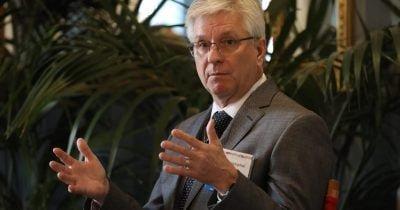
Recent statements from Federal Reserve Governor Christopher Waller indicate a potential shift in monetary policy focus, prompting market analysts to reconsider upcoming Federal Open Market Committee (FOMC) decisions. Waller's emphasis on a stable labor market paired with rising inflation sets the stage for crucial discussions around interest rates.
Shifting Focus: Inflation vs. Employment
Waller's remarks come amidst a notable rise in inflation, with the U.S. Consumer Price Index (CPI) reflecting a 4.25% increase over the past year. The governor is now suggesting that the labor market's stability might take precedence over inflation as a key concern for monetary policy. This change represents a significant pivot from a previous focus primarily oriented toward inflation control.
Market Implications and Expectations
As of now, market participants are pricing in an 86.5% likelihood of no change in interest rates during the July 2026 meeting, although this reflects a slight decrease from 90% just a day earlier. These dynamics suggest that Waller’s comments could indeed have a tangible impact on investor sentiment, stirring thoughts of potential adjustments that were previously deemed unlikely. However, uncertainty remains, particularly with a 28% likelihood of a rate hike being considered for the September meeting.
The evolving scenarios could lead investors to recalibrate their strategies in anticipation of potential rate changes. This context highlights the critical importance of monitoring upcoming economic data releases, including CPI and employment figures, which are expected to influence market expectations significantly.
Looking Ahead: Key Factors to Monitor
Moving forward, one of the primary aspects for investors to watch will be further statements from Fed officials like Jerome Powell, as these comments may provide deeper insights into the central bank's future policy direction. Additionally, any shifts in inflation or employment data could lead to crucial adjustments in market pricing, aligning more closely with the Fed’s risk assessment changes.
In summary, Waller's shift in perspective underscores the nuanced balancing act the Federal Reserve must perform between fostering economic growth and managing inflationary pressures. This evolving narrative could create ripples of uncertainty, impacting both investor confidence and strategies as we approach key meetings.