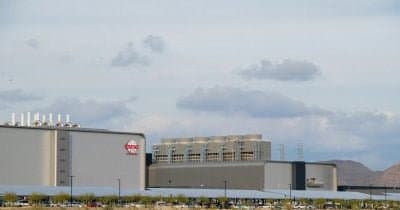
TSMC has committed a staggering $100 billion more to its Arizona semiconductor manufacturing expansion, pushing its total planned investment in the state to $265 billion. This move coincides with the company raising its 2026 revenue growth forecast to just above 40%, up from an earlier estimate of over 30%. These developments highlight the immense and sustained demand for AI chips expected through at least 2030, shaping both the semiconductor industry and broader tech ecosystems.
TSMC’s Expanding Footprint and Production Capacity in Arizona
Currently, TSMC operates one fully functional fabrication plant in Arizona, delivering productivity on par with its Taiwanese facilities. Two additional fabs are either in equipment installation or under construction, with plans for a fourth fab and an advanced packaging center on the horizon. CFO Wendell Huang characterized demand as a "multi-year structural demand," driven by the needs of consumer electronics, enterprise cloud infrastructure, and government projects.
This scale of investment in US manufacturing aligns with Washington’s strategic push to reduce geopolitical risks by onshoring semiconductor production, especially given rising tensions around Taiwan. While TSMC continues to expand in Taiwan, it faces headwinds like labor shortages, infrastructure limits, and tighter export controls, which reinforce the rationale for diversifying production.
Implications for AI Hardware Supply and Investor Considerations
TSMC’s upgraded revenue outlook signals that the order backlog for AI chips is filling faster than previously expected. For major AI hardware consumers, notably Nvidia, which depends on TSMC to produce H100 and B200 GPUs, this could mean alleviated supply bottlenecks and quicker delivery to hyperscale clients including Microsoft, Google, Amazon, and Meta all of whom have invested tens of billions in AI infrastructure this year.
Yet, the sizable $265 billion commitment carries risk. The assumption that strong AI chip demand will persist through 2030 underpins this investment. Should the AI spending surge stall, TSMC could face substantial fixed costs in US facilities that are notoriously specialized and difficult to repurpose. These factors introduce a layer of uncertainty to supply chains and investment returns, especially in a sector marked by rapid technological shifts and geopolitical tensions.
This article is informational and does not constitute financial advice.