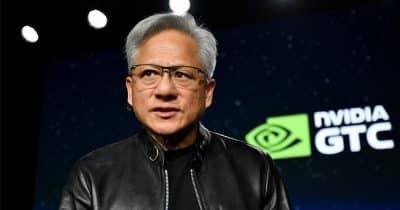
Jensen Huang, the CEO of Nvidia, recently delivered a striking lecture at Stanford University where he outlined the imminent necessity for the AI industry to ramp up computing power by a staggering factor of 1,000. This announcement is particularly significant considering the implications it holds not only for the AI landscape but also for the broader technological sectors, including cryptocurrency and semiconductor markets.
The Evolution from Generative to Agentic AI
During his lecture, Huang detailed the transition from generative AI models, which have dominated the landscape thus far, to what he terms ‘agentic AI’. This new class of systems is designed to understand complex contexts, reason through intricate problems, and autonomously execute multi-step actions. The leap in computational requirements projected at 1,000 times that of today’s generative models underscores an urgent need for a structural overhaul in AI infrastructure.
Impact on Supply and Market Dynamics
The forecasted 100 times increase in user interactions with agentic AI compounds the issue further. As enterprises seek to equip these advanced systems, the demand for GPUs, which have already seen a constrained supply, will escalate dramatically. Interestingly, Huang noted that resale prices for older Nvidia GPUs are rising, indicating a persistent scarcity in the hardware supply chain. This trend suggests that it is not merely a temporary surge but a more profound, ongoing imbalance between supply and demand.
Consequences for Crypto Mining
While Huang did not specifically mention cryptocurrencies in his address, the implications are unavoidable. Historically, GPU miners have competed fiercely with AI applications for hardware resources. As the demands for agentic AI grow, it is likely that mining operations will face even greater challenges in sourcing the necessary hardware, resulting in higher costs and potentially squeezed profit margins.
Furthermore, the pronounced increase in energy consumption anticipated to rise by 1,000 times could instigate crucial discussions regarding energy grid capacity. This predicament will drive investments in renewable energy sources and reignite conversations about sustainability in tech sectors already criticized for their environmental footprints. The overlapping energy challenges faced by both AI and crypto could spur regulatory scrutiny, making it imperative for stakeholders to prepare accordingly.
Investors and traders should keep a keen eye on the secondary effects rippling through the semiconductor supply chain, particularly in sectors related to high-bandwidth memory and advanced data center solutions. The intersection of these developments suggests that the technological shifts driven by AI may profoundly impact market dynamics across various sectors well into the future.