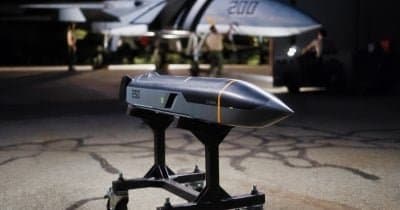
The recent unveiling of Anduril’s Barracuda missile on Japanese television marks a significant step in the defense posture surrounding Taiwan, reflecting heightened concerns about Chinese military ambitions. Palmer Luckey, the founder of Anduril Industries, highlighted this missile's role as a strategic deterrent, emphasizing its potential to counter Chinese aggression. The Barracuda, developed in collaboration with Taiwan’s National Chung-Shan Institute of Science and Technology, emerges as a cost-effective alternative to existing missile technology, notably cheaper than the U.S. Tomahawk.
This development underscores a broader military cooperation between the United States and Taiwan, aimed at fortifying defenses in the increasingly volatile Pacific region. As geopolitical tensions rise, the introduction of a more affordable yet effective missile option could complicate Chinese military strategies, fostering a landscape where mass deployment capabilities play a pivotal role in deterrence.
Implications for Military Readiness
The presentation of the Barracuda missile serves as a clear indicator of enhanced military readiness in the region. Its deployment could signal a shift in military strategy, favoring high-volume deterrence over the reliance on expensive, singular weapons. Observers note that this shift may escalate tensions between Japan and China, as the former seeks to align more closely with Taiwan’s defense initiatives. As Japan navigates its military posture, any formal alignment could act as a catalyst for increased regional hostilities, with market participants closely monitoring these developments.
Possible Reactions from China
The response from China to this increased military collaboration will be crucial in shaping the regional security dynamics. China may interpret the Barracuda missile presentation as a direct challenge, potentially prompting a recalibration of its military strategies in the area. This interplay between military posturing and economic implications could elicit a wide range of reactions from market participants, influencing sentiments about stability and conflict likelihood in the region.
As the situation evolves, developments related to the Japanese and Chinese governments will play a critical role in determining the trajectory of military engagements and the overall security landscape in the Pacific. Investors and analysts alike will need to stay attuned to these changes, as shifts in defense strategies can dramatically affect market perceptions and investment strategies.
This material is informational and not financial advice.