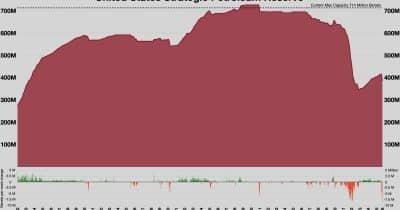
The recent decline of the US Strategic Petroleum Reserve (SPR) to a record low of 319.5 million barrels is prompting a re-evaluation of crude oil market dynamics. This drop, attributed to a drawdown of 6.2 million barrels as part of a broader release strategy, highlights significant tensions in the global oil landscape, exacerbated by ongoing geopolitical issues such as the U.S.-Iran conflict and instability in the Strait of Hormuz.
Why This Matters for Market Participants
The historical context of this development cannot be understated. The SPR's current level is the lowest it has been since 1983, representing only 45% of its total capacity of 714 million barrels. Such a drastic reduction signals tighter supply conditions in the crude oil market, which may lead to volatile price shifts moving forward.
- The SPR has decreased to 319.5 million barrels.
- This follows a drawdown of 6.2 million barrels.
- Current levels are at only 45% of total authorized capacity.
Market reactions indicate that traders are factoring in a potential rise in oil prices, with experts predicting that prices could reach new all-time highs due to these tightened supply conditions. However, the odds of this happening by September 30 remain relatively low, at just 2.6%, and only slightly more optimistic by December 31 at 7.5%. This nuanced outlook emphasizes the uncertainty and complexity facing oil investors currently.
Future Developments to Keep an Eye On
Looking ahead, market observers should remain vigilant regarding geopolitical developments in the Middle East. Escalating tensions could lead to further supply constraints, thereby affecting pricing dynamics significantly. Statements from key figures, such as OPEC’s Secretary General and the Saudi Minister of Energy, will be critical in gauging the future trajectory of oil production and market stability. Additionally, any forthcoming releases from the Energy Information Administration could also play a pivotal role in shaping market expectations.
This material is for informational purposes only and is not financial advice.