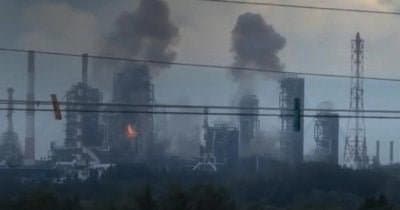
Russia's crude oil production has reached a critical juncture, plummeting to 8.86 million barrels per day in June 2026, the lowest level seen in over two years. This dramatic decline can be attributed to ongoing Ukrainian drone strikes that have systematically targeted and incapacitated key components of Russia's energy infrastructure. As of early July, approximately 42.7% of the nation's refining capacity is reported disabled, leading to a staggering 25% year-over-year drop in crude processing, which has fallen to 3.95 million barrels per day marking the lowest refining output in over two decades.
In response to these challenges, the Kremlin has made the strategic decision to reduce crude oil exports to prioritize domestic refining and alleviate growing fuel shortages in various regions. This move has resulted in production levels running significantly below Russia's OPEC+ quota, with a widening gap that reached around 910,000 barrels per day in June. Such a decrease poses a significant risk not only to Russia's economy but also to the global oil market stability.
The International Energy Agency (IEA) has already revised its forecasts for Russian oil supply downward, cutting projections by 85,000 barrels per day for 2026 and a further 150,000 barrels per day for 2027. This suggests that the agency anticipates a continued deterioration in production capabilities. If these trends persist, the global oil market could face a pressing need for replacement barrels, heightening the risk of volatility in energy prices.
The repercussions of these developments extend beyond traditional energy markets; they have the potential to influence sectors such as cryptocurrency mining. Bitcoin and similar proof-of-work operations are heavily reliant on electricity, and any sustained increase in global energy prices due to Russian supply disruptions could significantly drive up mining costs. Consequently, traders and investors in crypto markets must remain vigilant, closely monitoring the IEA's reports for indications of further production declines.
As fuel shortages begin to affect the everyday lives of Russian citizens, with administrative actions being taken to redirect resources, the ramifications of these energy challenges could cascade through both domestic and international markets. The ongoing conflict and its impact on energy infrastructure will likely continue shaping market dynamics for the foreseeable future.
This material is informational and not financial advice.