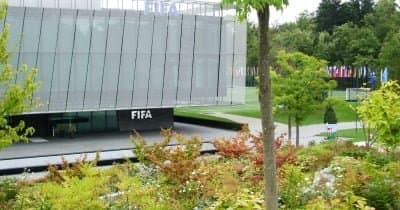
In a bold move, Norway's Football Federation (NFF) has taken the lead in a campaign to suspend the Israel Football Association from FIFA. This initiative, spearheaded by NFF president Lise Klaveness, challenges the organization to adhere to its own statutes on discrimination and human rights violations. Such actions not only push the boundaries of sports governance but also reflect the intricate relationship between geopolitics and international sports.
NFF's Commitment to Human Rights
The origins of this campaign can be traced back to 2024, when the Palestinian Football Association formally requested FIFA to consider Israel's suspension due to alleged human rights abuses in Gaza and discrimination against Palestinian athletes. Klaveness has been a vocal advocate for this cause since early 2025, opting for a strategy that emphasizes enforcement of FIFA’s own regulations rather than a broad boycott of Israeli football.
For instance, during a World Cup qualifier against Israel in October 2025, the NFF donated all ticket revenues, approximately 5,000 Norwegian Krone (around $185,500), to support medical relief efforts in Gaza. This act not only reinforced the NFF's stance but also highlighted how sports can intersect with humanitarian issues. Klaveness's position on UEFA’s executive committee further amplifies her influence, allowing her to advocate for this cause on a continental level.
The Implications of FIFA's Actions
FIFA's recent imposition of a 150,000 Swiss franc fine on Israeli clubs in March 2026, following allegations of discrimination, signals that the governing body acknowledges the merit in these complaints. However, the core issue remains: why does FIFA appear to apply its rules selectively? The contrasting treatment of nations raises critical questions about fairness and consistency within FIFA's governance.
The precedent set by Russia’s suspension from FIFA and UEFA competitions after its invasion of Ukraine is particularly relevant here. It demonstrates that national football associations can face exclusion based on their governments' actions that violate FIFA's statutes. The NFF argues that if severe military actions justify suspending a nation, similar standards should apply to others enduring allegations of human rights violations.
Geopolitical Risk in Sports
The renewed visibility of this campaign during FIFA World Cup coverage in July 2026 further propels the debate into international headlines and raises critical discussions about the intersection of sport and politics. As sports entities navigate these complex geopolitical waters, the implications for governance and international relations become more pronounced.
Investors and stakeholders in the sports industry must now consider how these geopolitical undercurrents could influence not only funding and sponsorship opportunities but also fan engagement and global perceptions of leagues and teams. With increasingly vocal advocacy for human rights in sports, the governance of international bodies like FIFA is under a microscope, necessitating transparency and accountability.
This material is informational and does not constitute financial advice.