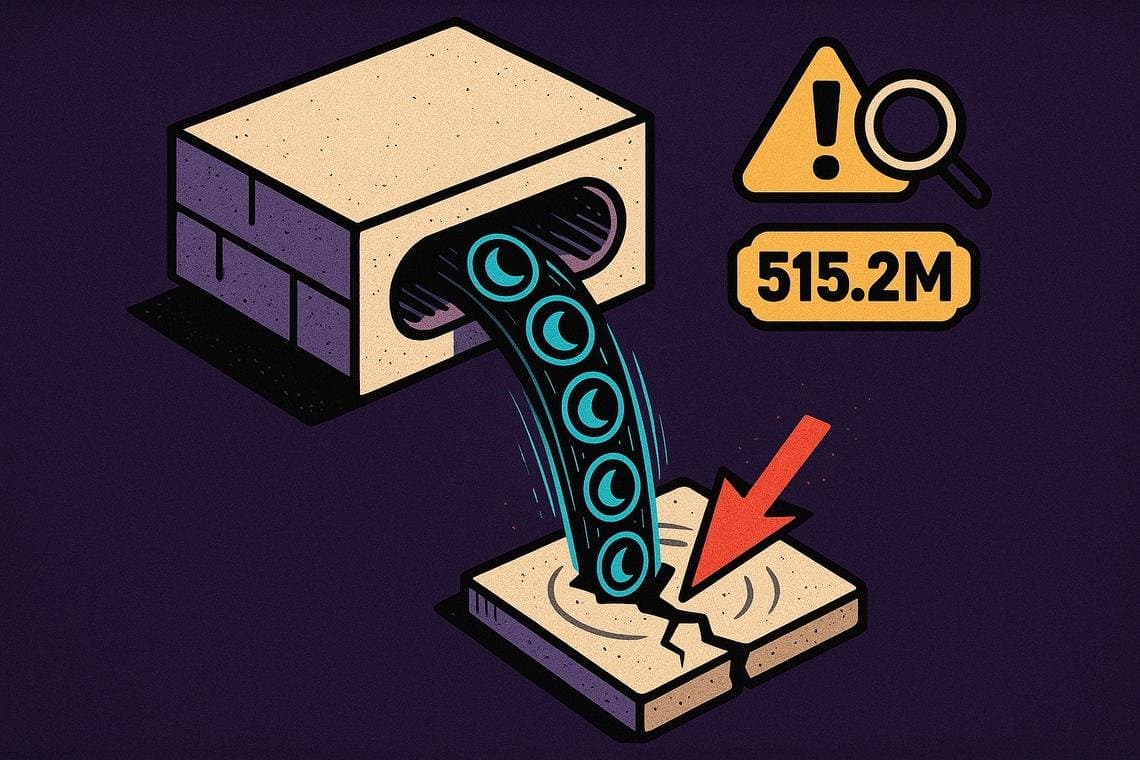
The rapid transfer and subsequent sell-off of 515.2 million NIGHT tokens within eight minutes led to a nearly 50% plunge in its price, exposing critical vulnerabilities in cross-chain bridge security and market dynamics. This event demonstrates how a single, targeted flow of tokens can ripple through decentralized exchange liquidity and investor confidence in DeFi projects.
Dissecting the Token Movement and Its Market Impact
On July 20, 2026, the Wanchain bridge contract moved all its NIGHT holdings over half a billion tokens in four separate transactions totaling 515.2 million NIGHT. the bridge held multiple assets, including Mynth, XER, and WMT, none of which were touched. This precise draining targeted only NIGHT, underscoring deliberate intent and insider-level access.
Within minutes, these tokens consolidated into one wallet and then funneled through two wallets, believed to be controlled by a single entity. One wallet offloaded roughly 300 million NIGHT on various decentralized exchanges. This concentrated sell pressure caused NIGHT’s price to collapse from around $0.034 to approximately $0.0174 a 49% drop before stabilizing with heightened trading volume spiking 798% to $125.96 million in 24 hours.
Implications for the Midnight Network and Broader DeFi Ecosystem
The Midnight Foundation quickly confirmed that the incident did not compromise the Midnight blockchain itself. Instead, the breach was isolated to the third-party Wanchain Cardano-BNB bridge, highlighting systemic risk in reliance on cross-chain bridges. These points of vulnerability continue to be weak links in decentralized ecosystems, as attacks or exploitations on bridges can produce outsized impacts on token price and project reputation.
Investors should note the lingering 200 million unsold NIGHT tokens still controlled by the same entity, representing a significant overhang that could suppress prices further if liquidated. The incident shows the need for enhanced security and transparency in bridging technologies, as well as caution when evaluating tokens reliant on multiple chains.
Such incidents interrupt confidence and liquidity flows, potentially triggering broader sell-offs or sharp price corrections in correlated assets. They also emphasize the importance of on-chain analytics to trace token movements and identify coordinated market activity promptly.
This material is informational and does not constitute financial advice.