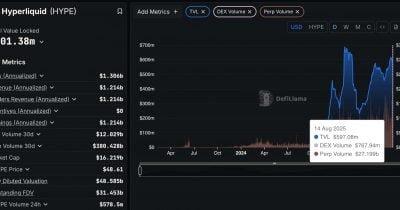
The rise of Hyperliquid, a decentralized platform specializing in perpetual futures, is a key indicator of the ongoing evolution within the trading landscape. With an impressive share of 8.7% of global open interest, translating to over $4.3 billion, Hyperliquid's emergence signifies a critical juncture for both centralized exchanges (CEXs) and decentralized exchanges (DEXs).
Shifting Market Dynamics
This surge in market share is particularly notable as it mirrors the trend witnessed during 2020, where DEX platforms captured more than 8% of the spot trading market. The current dynamics suggest a gradual migration of traders from traditional exchanges to decentralized alternatives, as the advantages of DEXs become increasingly apparent. Key aspects driving this transition include reduced trading fees, enhanced security, and the decentralized nature of these platforms, which resonates with the core values of the crypto community.
Institutional Confidence and Implications
The active participation of major market-making firms such as Jump, Wintermute, and GSR in creating dedicated wallets on Hyperliquid not only underscores institutional confidence but also strengthens the platform's competitive stance. This involvement of reputable firms can act as a double-edged sword; while it solidifies Hyperliquid’s infrastructure, it also raises the stakes for regulatory scrutiny, which could reshape operations in this evolving sector.
HYPE Token Valuation and Market Sentiment
The market sentiment surrounding Hyperliquid is further illustrated by the trajectory of its HYPE token, which is nearing all-time highs. Such valuations reflect optimism regarding the platform's future growth and underscore the potential for enhanced liquidity and trading volume. The implications are far-reaching: a robust token value not only incentivizes current stakers but also attracts new investors eager to capitalize on what many believe to be the future of trading.
Future Outlook: What to Monitor
As Hyperliquid continues to assert its presence, observers should keenly watch for additional market shifts that may arise. Key indicators to track include changes in market share metrics among CEXs and DEXs, fluctuations in validator engagement, and any strategic partnerships with significant enterprises. Furthermore, increased regulatory scrutiny, as seen in various sectors, could have pronounced effects on market operations. Stakeholders must remain vigilant for announcements that could modify the competitive landscape and redefine engagement strategies within decentralized trading platforms.