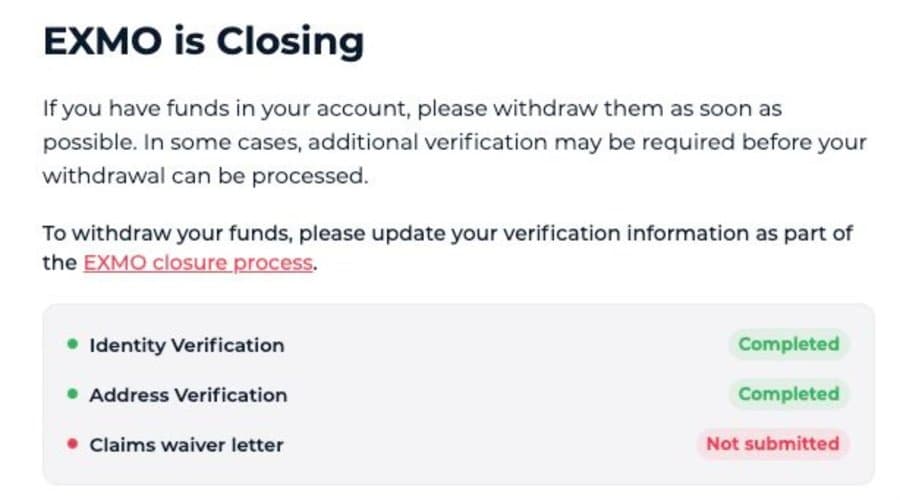
In a recent statement, EXMO.com announced its decision to wind down operations due to UK financial sanctions against entities within its group. The exchange, which has long been favored by Russian-speaking traders, is now facing significant operational challenges, leading to users holding IOU tokens instead of recoverable assets.
The sanctions, imposed on May 26, 2026, categorize EXMO Exchange Limited among 18 other entities and individuals accused of facilitating Russia's war economy. UK authorities' actions against what they term the "A7 network" have immediate ramifications for the exchange, halting new account registrations, deposits, and new trading positions. Although users can still close existing positions, the situation raises pressing concerns about liquidity and asset recovery for affected traders.
Significantly, EXMO has revealed that 29.4% of its total obligations to users cannot currently be returned. This shortfall is attributed to two main issues: unrecovered assets from a hack in December 2020, which accounted for roughly 5% of the exchange's total assets, and the freezing of funds imposed by third-party custodians following the recent sanctions. This scenario poses a serious threat to user confidence, as many may now question the stability and security of exchanges operating in politically sensitive regions.
Blockchain analytics firm TRM Labs previously noted that despite EXMO's exit from the Russian market after the 2022 invasion of Ukraine, it continued to share custodial infrastructure with its Russian-facing counterpart. This ongoing relationship, coupled with the sanctions, suggests a complex web of regulatory compliance and operational risk that could impact other exchanges with similar ties. As traders assess the fallout from EXMO's shutdown, the situation shows broader market vulnerabilities and the importance of regulatory clarity in ensuring investor protection.
This article is for informational purposes only and is not financial advice.