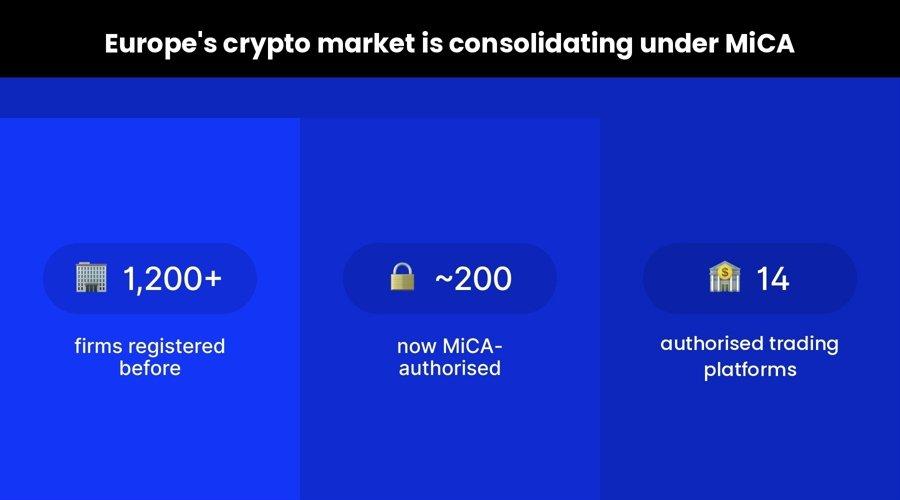
As of July 1, the European crypto landscape has undergone a significant transformation, marking the end of the transitional period under the Markets in Crypto-Assets (MiCA) regulations. This pivotal shift leaves major players like Binance operating without EU authorization, while Tether's USDT has faced delisting on several major regulated platforms. The importance of these developments cannot be understated, as they signal a decisive move towards a unified regulatory framework covering all 30 EEA states.
Impact of MiCA on Existing Crypto Firms
The expiration of the grandfathering period signifies a critical juncture for many crypto operators. Companies that were previously legible under legacy rules are now forced to adapt swiftly or cease operations. The European Securities and Markets Authority (ESMA) has been clear: operating without proper authorization post-deadline constitutes a breach of EU law, prompting national regulators in countries like France and the Netherlands to initiate enforcement actions.
The Rise of Licensed Crypto Platforms
Only about 200 firms currently hold licenses under MiCA, with a mere 14 exchanges meeting the standards needed to operate significant trading platforms. This consolidation is already reshaping the market, with the licensed platforms anticipated to account for an impressive 95% of the estimated EU crypto transaction volume. This statistic highlights a substantial concentration of market share among a select few, suggesting that traditional exchanges may struggle to reclaim their positions post-regulation.
Several jurisdictions have emerged as breeders of regulated activities. For example, Luxembourg, Malta, and Austria have successfully attracted the majority of major exchange licenses, while Ireland has established stringent operational requirements that only permit serious players into the market.
Potential Consequences for the Crypto Ecosystem
As the market transitions into a more regulated environment, we can expect a range of outcomes. The tightening of regulations may deter innovative startups and smaller players from entering the ecosystem, possibly stifling competitiveness in the long run. However, for existing licensed firms, there is an opportunity to build consumer trust and solidify market dominance by offering compliant and secure services.
As we brace for the implications of MiCA, market participants must adapt to the stricter regulatory landscape while identifying new avenues for growth. It will be vital for investors to keep a close eye on how new regulations impact the operational capabilities of exchanges and the overall market dynamics. The landscape is shifting, and understanding the ramifications of these regulations will be crucial for successful investment strategies in the crypto space.