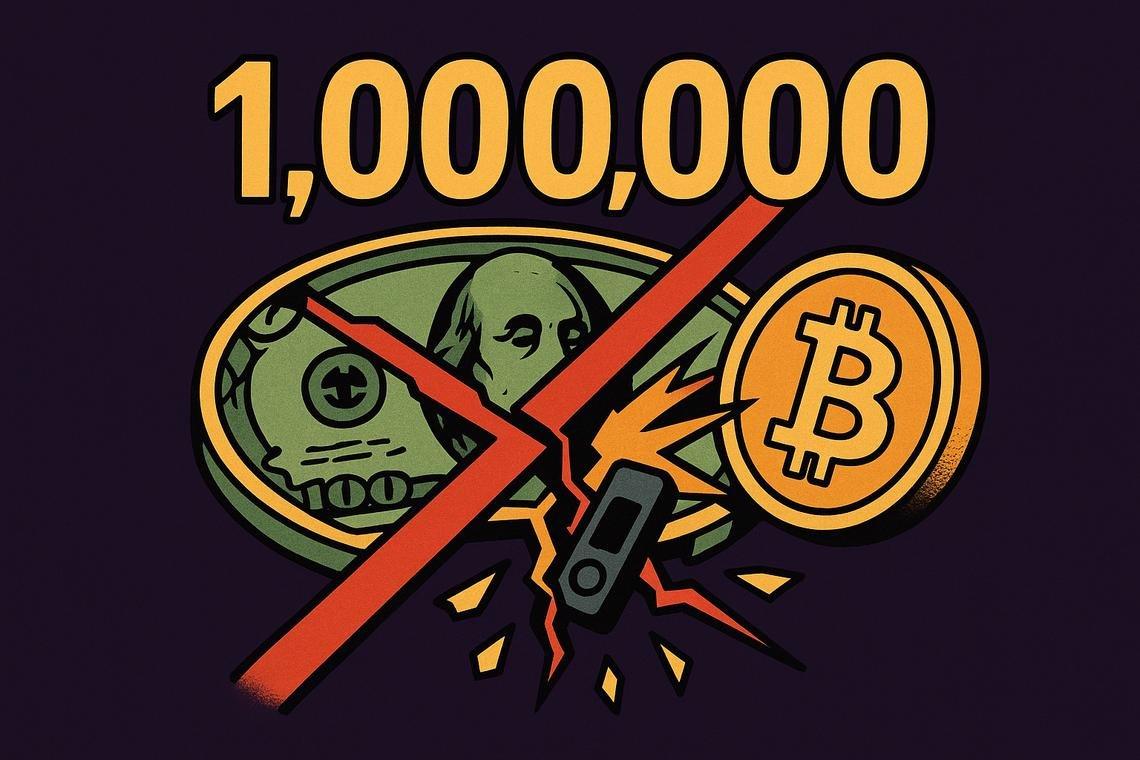
The prospect of Bitcoin reaching a price tag of $1 million has excited many in the cryptocurrency community. However, Eric Larchevêque, co-founder of Ledger, offers a starkly different interpretation: such a milestone would not signify triumphant adoption of cryptocurrency but rather a catastrophic failure of global economic systems.
The Undergirding Financial Landscape
Larchvêque cites the alarming U.S. national debt, which has eclipsed $39 trillion, as a core factor that could precipitate a currency crisis. He argues that if Bitcoin were to hit the $1 million mark, it would likely be an indication of severe global turmoil, including debt crises, rampant inflation, or even war situations where traditional fiat currencies would fail.
Context is Key: Bitcoin as a Safety Net
Describing Bitcoin as a 'final settlement tool,' Larchevêque views the cryptocurrency not as a speculative asset for profit but as a means of preserving wealth amid chaos. Holding nearly all his liquid assets in Bitcoin, he emphasizes its role as a protective measure rather than an investment strategy aimed at capitalizing on rising prices. This distinction is crucial, as it transforms how investors should frame their approach to Bitcoin trading and holding strategies.
Geographic and Economic Disparities
The context in which Bitcoin is used varies dramatically across the globe. For individuals in countries like Iran, beset by sanctions and economic restrictions, Bitcoin stands as a tangible lifeline, enabling them to navigate dire financial circumstances. However, for individuals living in economically stable regions like France, the value of Bitcoin can appear abstract essentially a hedge against risks that have not yet become pressing realities. This dichotomy raises important questions about how different demographics perceive the cryptocurrency's value.
Ultimately, Larchevêque’s perspective reframes the conversation about Bitcoin’s price potential, challenging the common notion that higher prices equate to success. Instead, he posits that soaring prices could be a harbinger of impending calamities, thus prompting a critical reevaluation of Bitcoin’s role in contemporary financial systems. This perspective is particularly vital as investors traverse these turbulent economic landscapes, where the implications of their positions in cryptocurrencies may stretch far beyond mere profit or loss.