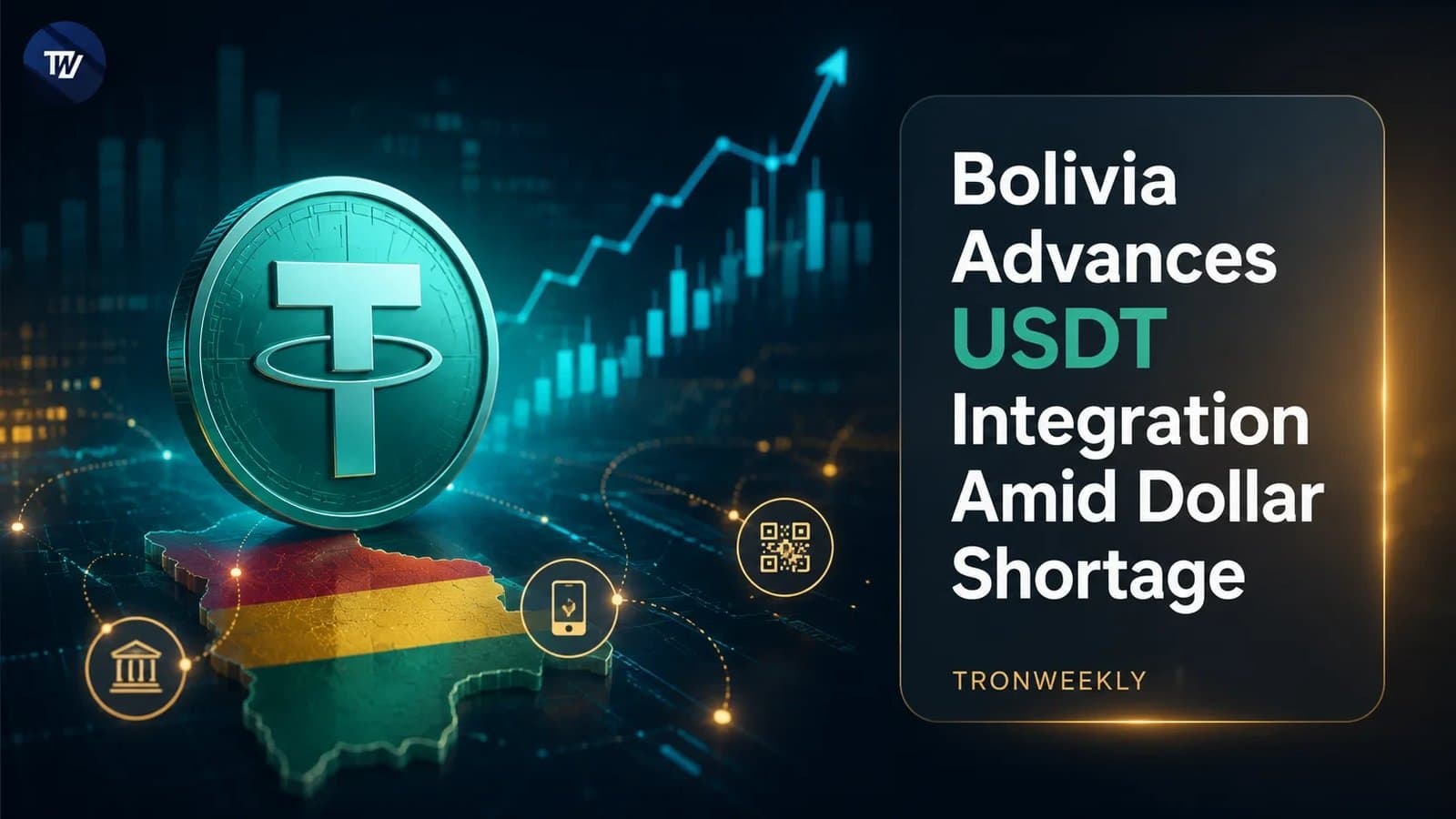
Bolivia has embarked on a significant journey to integrate Tether's USDT stablecoin into its economy, currently under formal review. This initiative comes as the nation grapples with a foreign currency shortage that threatens economic stability. José Gabriel Espinoza, the Minister of Economy and Public Finance, announced that the government is evaluating whether USDT could effectively function alongside the boliviano and the U.S. dollar.
Espinoza indicated that should regulations for USDT be approved, it could serve as an additional currency, providing much-needed liquidity in the market. As of now, the proposed regulatory framework is still undergoing technical scrutiny, though its approval could facilitate payments, savings, trading, and other financial operations.
The introduction of USDT could also minimize traditional banking procedures, allowing a transition to a more digitized economy. Notably, no specific timeline for regulatory approval has been established, leaving investors and users in a state of anticipation.
Regulatory Challenges Ahead
One of the critical hurdles mentioned by Espinoza is the implementation of stringent anti-money laundering (AML) measures. Bolivia remains on the Financial Action Task Force's (FATF) grey list, meaning it will face intensified scrutiny over its compliance with international financial regulations. This status will significantly influence how the country approaches the integration of stablecoins and emphasizes the necessity for solid reporting and verification protocols.
A successful USDT integration could mark a turning point for Bolivian banks, especially since the government lifted its longstanding crypto ban in 2024. This opened the doors for digital assets to become a part of financial policy discussions, paving the way for banks and licensed firms to explore crypto services more thoroughly. Local banks like Banco Unión and Banco FIE are already launching products tied to USDT, which suggests they are preparing to meet potential market demands.
Implications for Local Banking and Economic Strategy
Should Bolivia successfully navigate the regulatory landscape, the integration of USDT could expedite money transfers and reduce transaction costs, thus decreasing reliance on informal currency exchange markets. Currently, USDT is the largest stablecoin by market capitalization, further emphasizing the importance of this integration in the context of regional economic dynamics.
In conclusion, Bolivia's moves toward USDT integration articulate a broader strategy for digital asset adoption that could reshape financial transactions in the country. As local authorities deliberate on the regulatory landscape, the outcome of this review may have far-reaching implications for Bolivian economic practices and international financial relations.
This material is for informational purposes only and should not be considered financial advice.