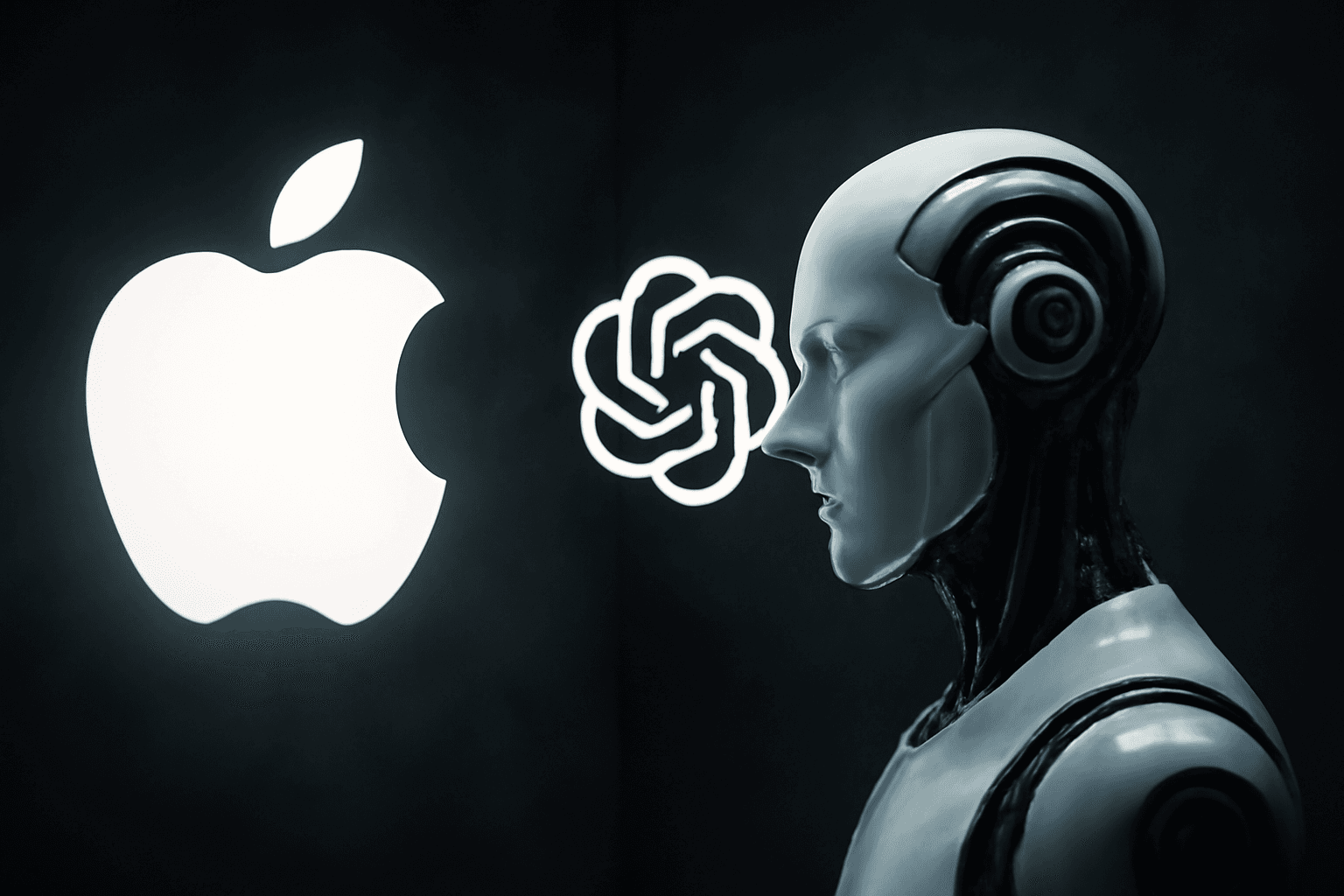
The escalating feud between Apple and OpenAI, marked by a recent lawsuit, highlights the intensifying competition in the tech industry, particularly in the AI sector. Apple's legal action against OpenAI accuses the latter of stealing trade secrets and violating contractual agreements, a serious charge that could have significant implications for both companies and the broader market.
At the heart of Apple's complaint are allegations concerning former employees who transitioned to OpenAI. Specifically, Apple contends that Tang Tan and Chang Liu, both ex-Apple executives, played roles in recruiting other Apple personnel while improperly leveraging sensitive information related to upcoming hardware products. This lawsuit not only underscores the fierce competition for talent in the tech industry but also raises questions about intellectual property protection and the ethical boundaries of recruitment strategies.
The Dynamics of Competition
The rivalry between Elon Musk and Sam Altman has resurfaced as a backdrop to Apple's legal moves. Musk has publicly criticized Altman, branding him a 'scammer' and implying that OpenAI's advancements are tainted by unethical practices. This public exchange is emblematic of broader tensions in the tech landscape as companies vie for dominance in AI technology. Altman’s retort claiming that Musk’s criticisms validate OpenAI’s latest AI model, GPT-5.6 Sol, suggests that this rivalry could inadvertently bolster OpenAI's public image as a leader in AI innovation.
Implications for Investors and the Market
The ramifications of this legal dispute could extend well beyond the courtroom. For investors, the outcome may influence perceptions of both companies’ stability and their respective market positions. If Apple’s claims hold up, it could lead to further scrutiny of OpenAI’s practices and potentially hinder its growth trajectory. Conversely, if OpenAI emerges unscathed, it may reinforce investor confidence in its AI developments.
Additionally, this case could set a precedent for how tech companies approach talent acquisition and intellectual property in the rapidly evolving AI market. As competition intensifies, companies might need to reassess their recruitment strategies to avoid similar legal pitfalls. The stakes are high, and the outcome of this lawsuit could ripple through the tech sector, prompting other companies to evaluate their own practices in light of potential legal challenges.
This article is for informational purposes only and should not be considered financial advice.