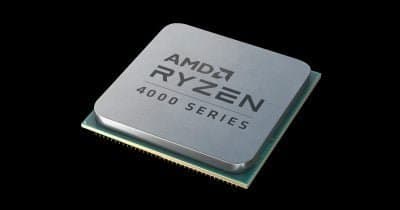
AMD has overtaken Nvidia in the iShares Semiconductor ETF (SOXX), a $45 billion fund, signaling a notable shift in chip sector leadership. As of July 16, 2026, AMD's weighting stands at 8.43%, just below Nvidia's 8.53%, while Micron Technology rapidly approaches with 7.63%. These seemingly small percentage changes translate to billions of dollars redirected, reflecting investor confidence moving across key players in semiconductors.
ETF Weighting Shifts Reveal Market Evolution
The SOXX ETF tracks the NYSE Semiconductor Index and contains 30 holdings with an expense ratio of 0.34%. Nvidia, AMD, Micron, and Broadcom occupy the top four slots with 8.53%, 8.43%, 7.63%, and 7.28% respectively. This contrasts sharply with data from May 2026, where Micron led at nearly 10%, AMD held 8.88%, and Nvidia lagged at around 7.05%. Over just two months, the reshuffling suggests rapid changes in market expectations and sector momentum.
Importantly, SOXX's year-to-date return of 76.27% through mid-July confirms strong appetite for semiconductor exposure amid AI-driven demand. Nvidia's relative decline in ETF weighting does not indicate any fundamental struggle but rather highlights competitors successfully capturing AI-related growth segments. AMD's expanding data center business and Micron's increasingly vital memory chips for large AI models underpin this competitive balancing act.
Semiconductors underpin the entire AI and crypto infrastructure ecosystem. Every Bitcoin miner, GPU-powered validator, and decentralized compute network depends on chips from these companies. AMD's rise is especially relevant to crypto investors due to its GPUs’ favorable price-to-performance tradeoff, historically favored by miners and decentralized protocols. Micron’s growing role in high-bandwidth memory reflects its critical position in AI training and inference environments.
Investors should note that while Nvidia was previously the sector’s uncontested leader, the broader chip market is now more dynamic. Broadcom’s 7.28% ETF weighting also points to diversification within semiconductor value creation, leveraging custom chips and application-specific integrated circuits beyond Nvidia’s ecosystem.
The strong 76% gain priced into SOXX within half a year sets high expectations. Valuation risks loom if competitors stumble or AI demand cools. Yet this internal ETF rotation suggests that dominant AI-related chipmakers will no longer operate in isolation but must contend with peers advancing rapidly in adjacent domains.
This material is informational and not financial advice.