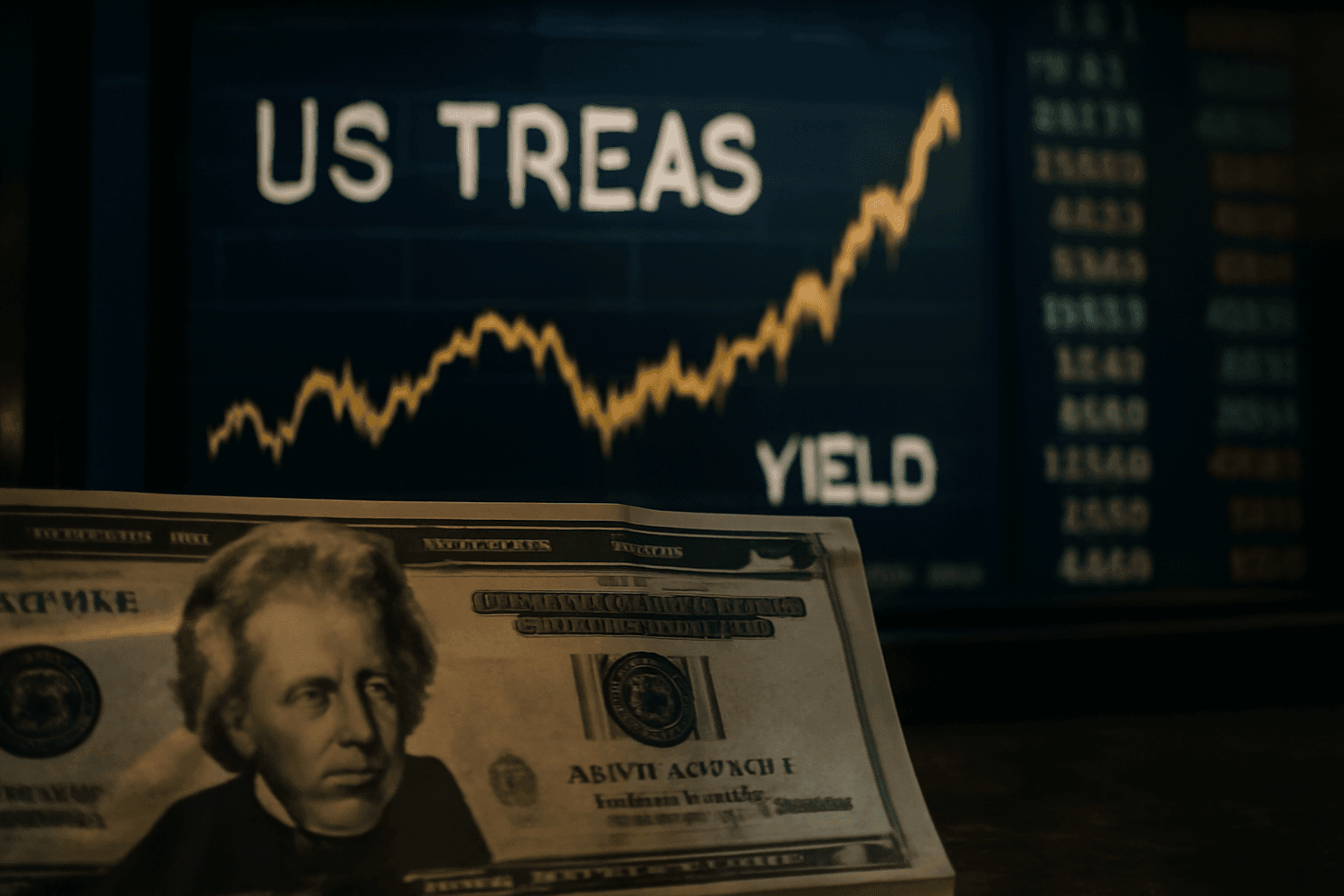
Long-term US Treasury yields climbed sharply past 5.20%, reaching levels unseen since 2007, even as the Federal Reserve kept interest rates steady at 3.50% to 3.75%. This unexpected divergence signals growing pressure within the financial system, underscored by rising delinquencies on credit cards hitting their highest point since 2010.
Fed Sticks to Current Rates Amid Market Tensions
The Federal Open Market Committee voted 9-3 to hold rates steady during their July meeting, though three regional Fed presidents favored a 25 basis point increase. This split marks the most hawkish disagreement of Fed Chair Kevin Warsh’s tenure. Despite the hold, bond markets reacted unusually yields surged after the announcement rather than retreating. Usually, holding or lowering rates eases long-term borrowing costs, but the opposite occurred this time.
Warsh attributed this shift to the Fed’s new stance on guidance, urging markets to interpret economic signals independently instead of relying on direct central bank cues. Inflation remains stubbornly high near 4%, well above the 2% target the Fed aims for. This persistent inflation, combined with federal budget deficits and geopolitical energy shocks linked to the Iran conflict, is pushing borrowing costs higher.
Financial Strain Reaches Beyond Bonds
High Treasury yields are not the only warning sign. Serious credit card delinquencies have climbed to levels last seen in 2010, a red flag for consumer stress. Mortgage rates are also edging closer to 8%, intensifying affordability challenges in the housing market. These factors together paint a picture of growing strain across the US economy as borrowing costs rise and financial conditions tighten.
Bitcoin experienced a brief dip following the news but quickly recovered, showing that the crypto market’s reaction remains contained amid broader financial turbulence.
Energy shocks tied to the Iran conflict are part of the backdrop increasing market uncertainty and feeding into higher yields and delinquencies.
This material is for informational purposes only and does not constitute financial advice.