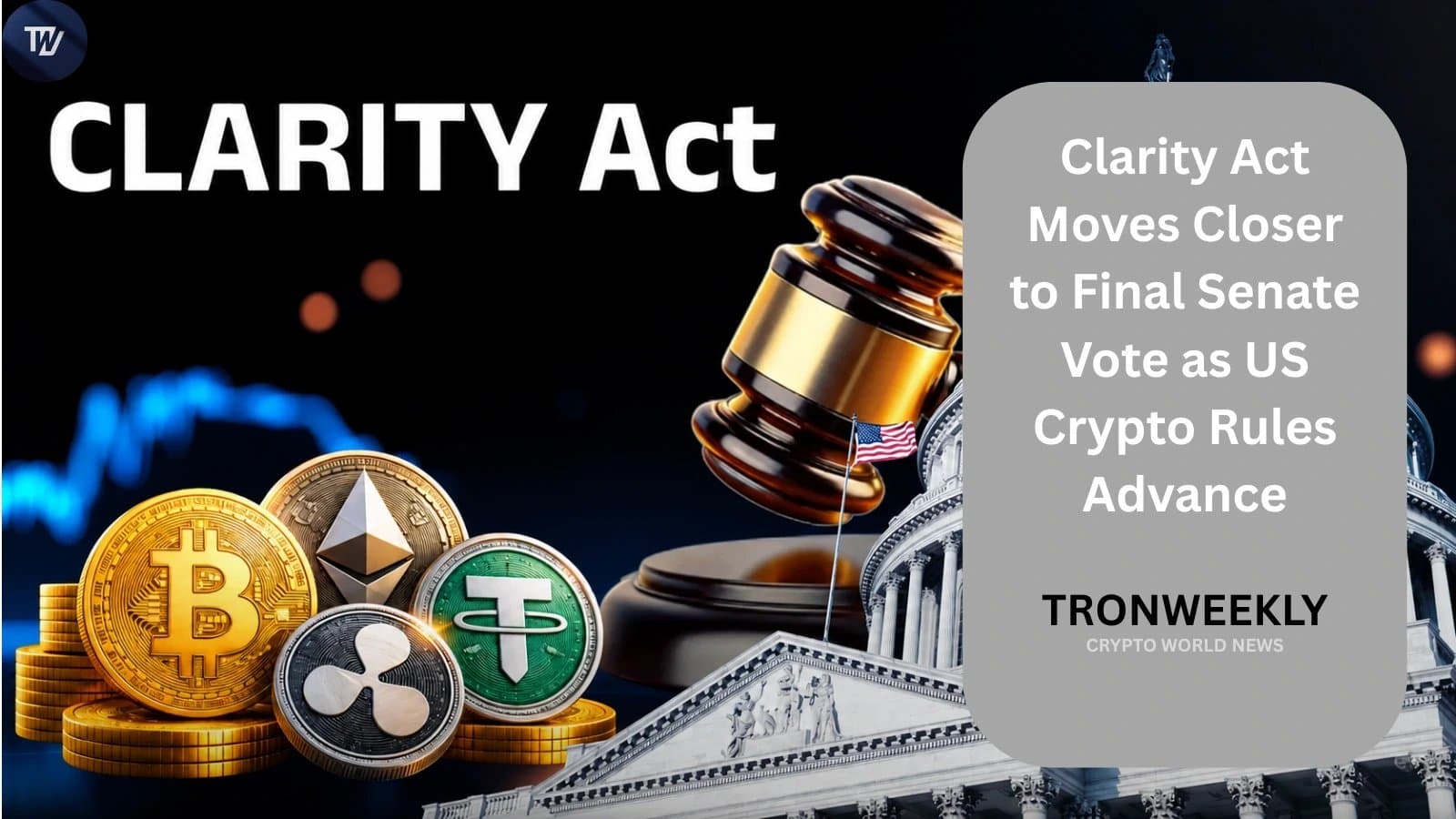
The Clarity Act has cleared another legislative hurdle and is now headed to a full Senate floor vote, bringing the United States closer to its first federal regulatory framework for digital assets. The 616-page bill took years to reach this point: the House passed it in July 2025, the Senate Banking Committee approved it in May 2026, and it now awaits a verdict from the full chamber.
At its core, the legislation splits oversight responsibility between two existing regulators. The Commodity Futures Trading Commission would handle most crypto tokens, while the SEC retains authority over assets that qualify as securities, specifically investment contract tokens. Beyond that jurisdictional split, the bill lays out anti-money-laundering obligations, investor protections, and bankruptcy procedures for digital asset firms. It's a lot of ground to cover, and the 616 pages reflect that.
Industry backing and lingering opposition
Coinbase CEO Brian Armstrong called the bill the product of thousands of hours of bipartisan work, pointing to the FTX collapse as a direct consequence of the regulatory vacuum that currently exists. Ripple's chief legal officer Stuart Alderoty argued the act would give law enforcement and regulators sharper tools against fraudsters, while Ripple CEO Brad Garlinghouse acknowledged the bill isn't perfect but said having clear rules on the books matters more than holding out for an ideal text. The fact that the SEC's own conduct has been under scrutiny in recent months adds some urgency to the push for a statutory framework that doesn't rely solely on agency discretion.
Not everyone is on board. A bloc of Senate Democrats still opposes the bill, and cross-party negotiations over amendments are ongoing. Critics argue the legislation has gaps, particularly around consumer protections. Proponents counter with polling data suggesting most American voters already assume a federal crypto framework exists, which means the status quo is misleading the public.
If the Senate passes it, the Clarity Act would be the most significant crypto legislation in US history, reshaping how platforms, token issuers, and investors operate across the country. The final vote date has not been set, and the amendment talks could still shift the bill's shape before it gets there.
This article is for informational purposes only and does not constitute financial or investment advice.


