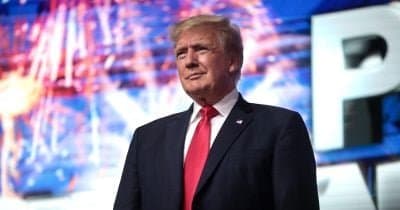
Donald Trump posted on Truth Social this week that any civilian nuclear cooperation agreement with Saudi Arabia is "totally subject to Saudi Arabia joining the very respected and successful Abraham Accords," collapsing what had been two separate diplomatic tracks into a single, linked package. That's a clear reversal from earlier signals the administration had sent, when officials suggested the nuclear deal and normalization talks could each advance on their own timeline.
What the deal actually covers
The proposed agreement, known as a 123 Agreement, would limit Saudi Arabia strictly to civilian nuclear use and explicitly ban uranium enrichment on Saudi soil. Trump's Truth Social post spelled it out directly: "The Civil Nuclear Deal (There will be no enrichment of material!) pertains only to non-military use such as the ones that Iran and UAE and others already have." The UAE framework he referenced is the existing US-UAE civilian nuclear cooperation deal, which prohibits Abu Dhabi from enriching uranium domestically, a standard Washington has pushed to replicate across the region.
Saudi Arabia has been pursuing nuclear energy capacity as part of its Vision 2030 agenda, aiming to cut the kingdom's own oil use for domestic power generation. More electricity from nuclear plants would free up additional crude for export, a detail that carries real weight for global oil supply projections.
Riyadh's position and why the math is hard
The Abraham Accords, launched in 2020 during Trump's first term, brought the UAE, Bahrain, Sudan, and Morocco into formal relations with Israel. Saudi Arabia was always considered the biggest potential addition, but Riyadh has held a consistent public line: normalization requires a credible path to Palestinian statehood. That condition predates the Gaza conflict and has only hardened since fighting intensified, making it politically riskier for the Saudi leadership to move now than it was a year ago.
By tying the nuclear deal to Accords membership, Trump has removed the flexibility that negotiators on both sides relied on. There's no longer a way for Riyadh to accept civilian nuclear cooperation as a standalone win while keeping normalization talks at arm's length. It's one package or none.
For investors watching broader market dynamics, the ripple effects here run through energy markets first, then dollar dynamics tied to petrodollar flows, and finally the risk premium priced into Middle Eastern assets. No cryptocurrency is directly connected to this deal, but sentiment shifts in commodity markets and dollar strength can feed into crypto risk appetite in ways that are worth tracking.
This article is for informational purposes only and does not constitute financial or investment advice.