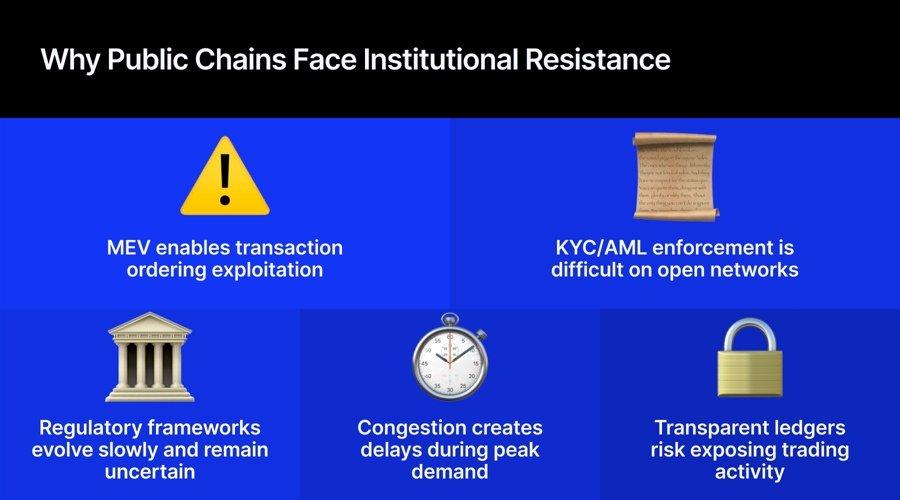
The ambition of crypto enthusiasts to trade traditional stocks on public blockchains reflects a utopian yet fundamentally flawed understanding of institutional finance. The concept envisions a decentralized marketplace facilitating transactions around the clock without brokers, leading to broader accessibility. However, this perspective overlooks significant operational realities within traditional finance.
Regulatory Landscape and Its Challenges
Recent developments by the United States Securities and Exchange Commission have added new dimensions to this discourse. The SEC proposed to rescind two core regulations under the National Market System, which mandate trades to be routed to the best available price and restrict crossed quotes across trading venues. Analysts such as Alex Thorn suggest that the removal of these rules might allow for compliant on-chain trading of tokenized U.S. equities.Nevertheless, this change is likely to unfold over a medium-term horizon rather than cater to immediate market desires. The proposal still faces a protracted comment period and institutional platforms would need to navigate complex registrations as exchanges or alternative trading systems, along with compliance for clearing and ensuring shareholder rights. Traditional market participants highlight that loosening these regulations could lead to decreased price transparency and fragmented market behavior.
Operational Realities of Public Blockchains
Even if the regulatory environment were to shift favorably, public blockchains are not without their significant impediments to facilitating institutional trading of equities. An ongoing concern is the volatility of gas fees, which can deter institutional engagement. A surge in retail trading activity has the potential to congest public networks, driving up transaction costs dramatically.For institutions, the unpredictability associated with large equity settlements is unacceptable. Traditional finance operates under a framework that prioritizes certainty in execution timing and expense. A bank executing substantial trades demands transparency and efficiency, while institutions are accustomed to millisecond precision in their operations. In this light, the notion of unrestricted trading on public networks may be more aspirational than practical.