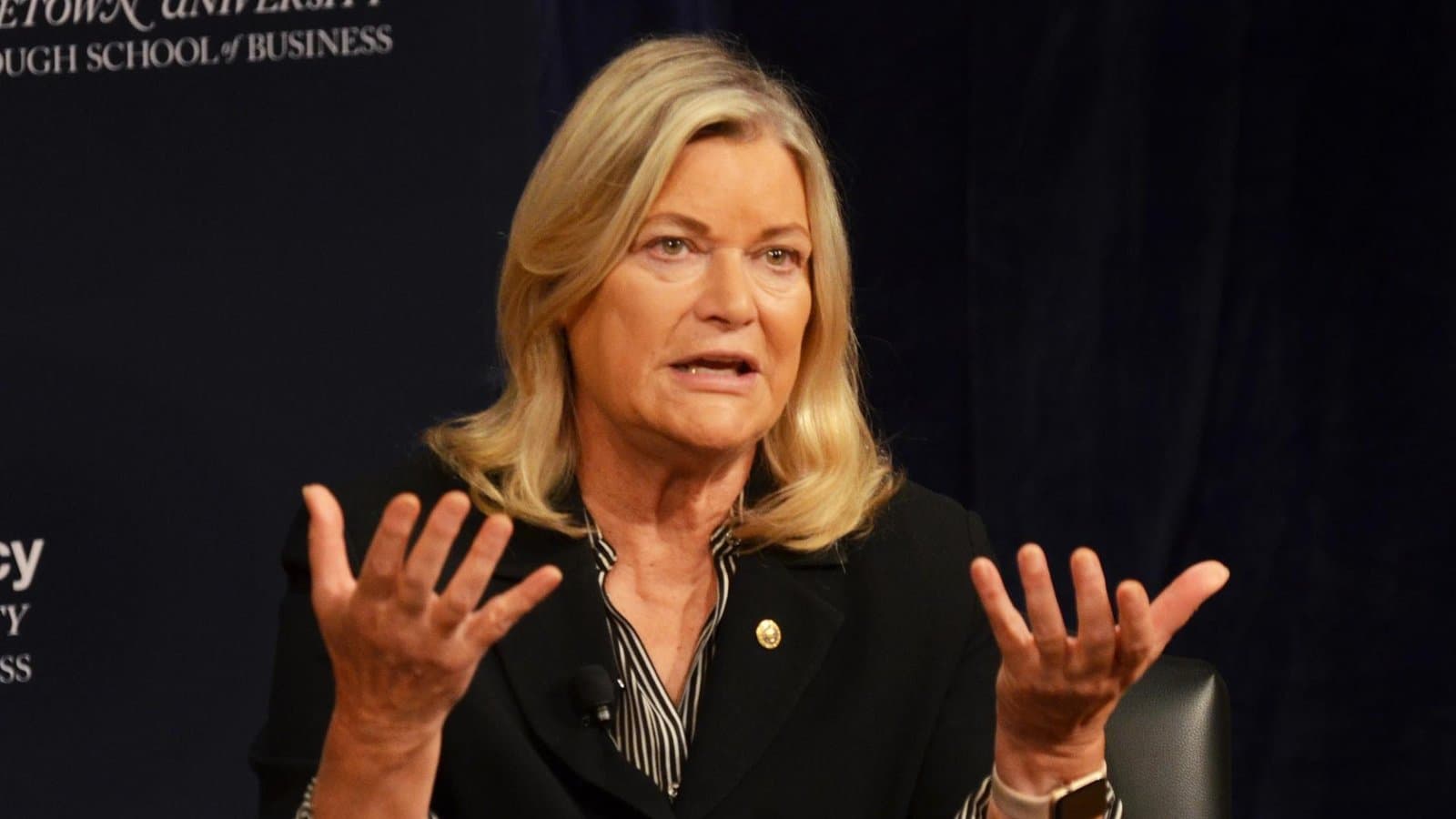
Weeks of talks and Republicans still could not agree with Democrats on a single point: whether state attorneys general should be allowed to bring criminal or private cases against officials covered by the Clarity Act's ethics provision. That question became the central sticking point as Senator Cynthia Lummis, one of the bill's lead negotiators, released a merged version of the Digital Asset Market Clarity Act on Wednesday, combining texts previously passed by the Senate Banking and Agriculture Committees into one document.
"That was a bright red line for a lot of U.S. senators who did not want to subject themselves to being sued by a different state attorney general," Lummis told CoinDesk. She added that the White House shared the same concern, having already faced multiple lawsuits from state AGs on other matters.
The ethics section covers conflict-of-interest limits on government officials' crypto involvement, and it is expected to remain under discussion through the weekend. A handful of other provisions, including some related to illicit finance, may also see revisions before any final vote. Lummis was clear that the text released Wednesday is not the finished product.
Three Senate committees fed into the bill: Judiciary, Ethics, and Intelligence. Lummis described the process as "very difficult" but said the moment had come to show the integrated draft to the industry and gather broader feedback. A group of Democrats earlier Wednesday publicly opposed the bill in its current form, signaling that negotiations are far from over.
One compromise on the table: states could still sue crypto exchanges that list assets violating the ethics provision, even if they cannot directly pursue government officials. Whether that trade-off will satisfy Democratic holdouts is unclear.
This article is for informational purposes only and does not constitute financial or investment advice.