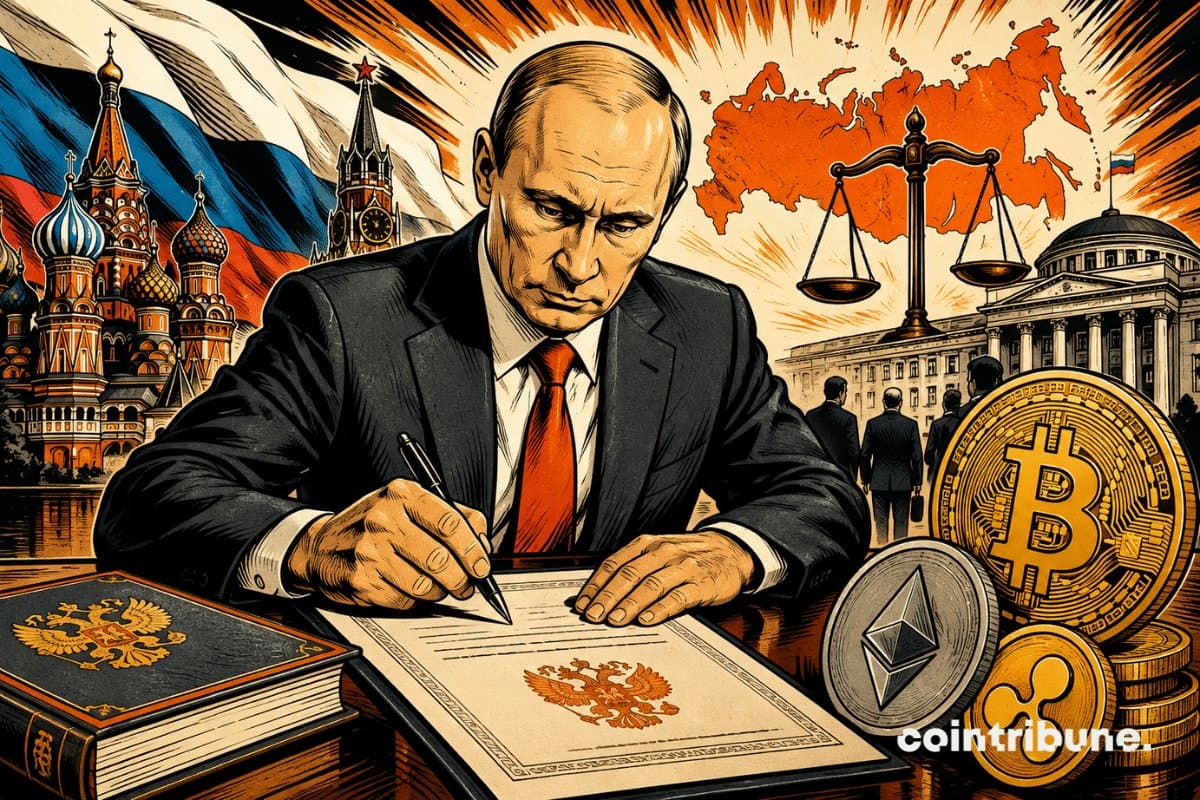
Putin has signed off on Russia's first real cryptocurrency regulation, a nearly 300-page law that finally spells out how traders, platforms, and banks can operate with digital assets. The framework kicks in September 1, 2026, giving the country nearly two years to sort out the technical details.
The law sailed through both chambers of parliament this summer. The State Duma approved it July 21, the Federation Council followed on July 24. Legislators had been debating the draft since April, wrestling over what should and shouldn't be allowed. Buying and selling crypto, trading it, keeping it as an investment, those are all in. Using it to actually pay for something in Russia, though, stays banned. The ruble is still the only legal tender.
What the Rules Actually Say
Anyone wanting to trade crypto has to pass a knowledge test first. Then there's a ceiling, at least for now. Individual investors can buy a maximum of 300,000 rubles worth per year, roughly $3,000. Banks, platforms, and custodians that want to touch crypto need Central Bank approval before they can operate. Starting July 1, 2027, every single transaction has to flow through one of those authorized intermediaries. No peer-to-peer swaps outside the system.
The regulation treats different market players differently. Traditional financial institutions get their own rulebook. Specialized crypto platforms get another. Custodians, the places where people actually keep their coins, have their own requirements too. It's a three-tier approach trying to keep some control while letting the market exist.
Russia's been cautious on crypto for years, oscillating between talks of bans and half-measures. This law is the country's attempt at a middle path, letting the sector function but clamping down on speculation and keeping it separate from the regular financial system. Whether traders will actually work within these limits, or whether the 300,000 ruble cap pushes serious money underground, won't be clear until 2026 rolls around.
This article is for informational purposes only and should not be considered financial advice. Always do your own research before making any investment decisions.