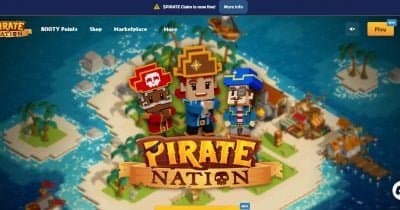
Pirate Nation's daily active users plummeted from over 100,000 to roughly 10,000. Proof of Play, the studio behind the on-chain RPG, announced its closure on August 5, releasing all code, artwork, smart contracts, and intellectual property into the public domain under a CC0 license. Anyone can now use it for anything, no permission required.
The studio had raised $33 million from Andreessen Horowitz in September 2023 to build the future of fully on-chain gaming. Monthly operating costs sat at $150,000. With engagement cratering 90%, those numbers stopped adding up. The game went dark in September 2025. Founder Amitt and co-founder Adam Fern kept the lights on for nearly another year before finally pulling the plug.
What CC0 actually changes
This isn't just open-source code. CC0 is a full surrender of intellectual property rights. A developer can grab Pirate Nation's Unity app, its smart contracts, its artwork, and build whatever they want. A competing pirate game. A completely different genre using the same art. A DeFi protocol that repurposes the smart contracts. All fair game.
The token and what's left standing
The PIRATE utility token won't disappear entirely. An independent entity called the Pirate Nation Foundation will maintain it and the game's website after the studio goes dark. That's the one piece of infrastructure staying alive.
Proof of Play's collapse ranks as one of the highest-profile casualties in Web3 gaming. The studio had tier-one venture backing, experienced founders, and a functioning product with real users. It still couldn't sustain engagement long enough to justify its burn rate. For crypto gaming investors betting on the space, that's a hard lesson. Building a game that works on-chain is only half the battle. Building one people actually want to keep playing is something else entirely.
This article is informational and does not constitute financial advice. Past performance and project outcomes do not guarantee future results in the crypto gaming space.