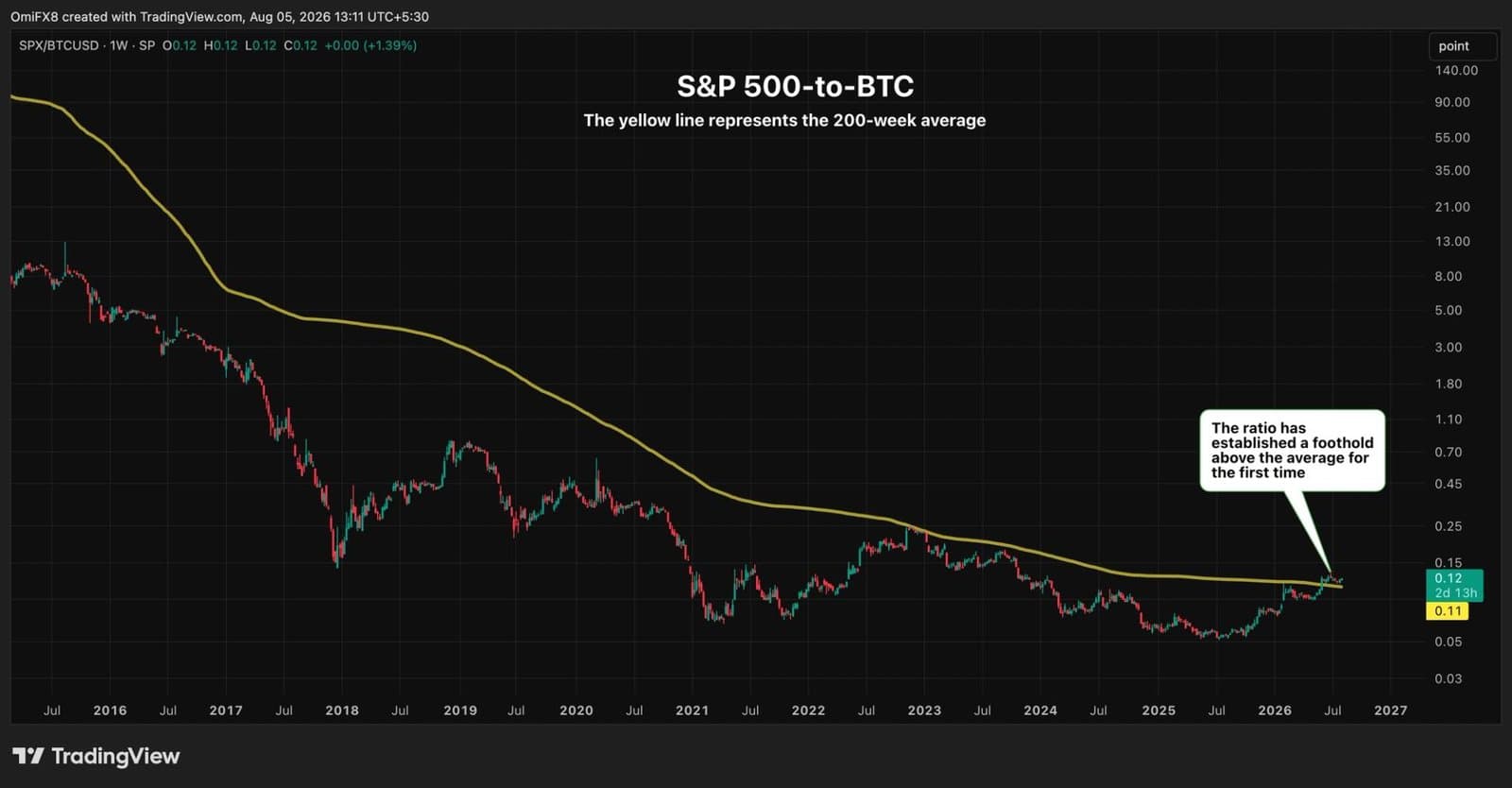
Crude prices are falling, and that's reshaping bets across equities and digital assets. The Dow hit record territory in May 2026 after U.S.-Iran relations showed signs of thaw, lifting hopes for a diplomatic settlement. Three months of sideways trading evaporated in days. The S&P 500 followed the same pattern, because cheaper energy means lower input costs for manufacturers, logistics firms, and consumer goods makers. Margin relief plus softer rate expectations gave institutions a reason to buy.
Bitcoin traded near $63,000 when oil weakness eased inflation fears. The catch: those gains arrived on thin volume. A price without buyers behind it tends to crack fast. When oil spiked in July amid fresh Middle East tensions, Bitcoin bled 3% to 8% intraday. Leveraged funds and options holders faced forced selling. Every oil tick now carries weight.
The earnings complication
Nasdaq's story was messier. Tech giants like Alphabet and Tesla posted results that had little to do with oil and everything to do with whether their stock prices made sense. That volatility exposed something bigger: market leadership is finally broadening beyond semiconductors. The AI concentration trade that dominated 2024 and 2025 is maturing. Companies need actual earnings power now, not just proximity to AI hype.
What traders are watching
Analysts see sustained lower oil as a multi-layer catalyst. Cheaper crude reduces energy-driven inflation fears, which weakens the case for aggressive rate hikes, which makes holding non-yielding assets like Bitcoin less punishing from an opportunity-cost angle. Geopolitical clarity around the Hormuz Strait remains critical, since any flare-up reverses the entire setup. For crypto, it's a reminder that energy prices and monetary policy still call the shots more than blockchain fundamentals do.
This material is informational only and should not be treated as financial advice or investment guidance. Crypto and equity markets carry substantial risk.