The Israeli Prime Minister's office is treating the current joint US-Israeli military posture toward Iran not as a goal in itself, but as use for pulling more Arab states into normalization deals. According to statements released by Netanyahu's office on June 11, 2026, coordinated pressure on Tehran, specifically the removal of enriched nuclear material and constraints on Iranian missile capabilities, creates the conditions Gulf governments need to justify going public with normalization.
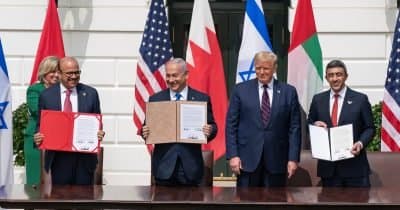
The Abraham Accords launched in September 2020 with the UAE and Bahrain, then quickly added Morocco and Sudan. By late 2025 the framework had stretched further to include Kazakhstan and Somaliland. Mid-2025 reporting showed the Trump administration making overtures toward Syria, Lebanon, and most significantly Saudi Arabia.
Why Saudi Arabia is the number that matters
The UAE-Israel relationship that grew out of the 2020 agreements has already produced billions in bilateral trade, direct flights, and joint ventures across technology and agriculture. Saudi normalization would dwarf all of that. Riyadh's sovereign wealth fund, its energy infrastructure, and the Vision 2030 investment program together represent a pool of capital that no other potential Accords partner comes close to matching.
As officials in Jerusalem frame it, every step that degrades Iran's nuclear and conventional threat posture makes it easier for Gulf states to move. Israeli officials have also outlined a longer-term strategy of reducing direct dependence on American military aid in favor of joint development programs. The current ten-year US military assistance agreement runs until 2028.
Whether the Iranian pressure campaign stays contained or escalates into something harder to manage remains the central variable for the entire regional calculus.
This article is for informational purposes only and does not constitute financial or investment advice.